iOS or Android first? How to choose where to launch your app
Launching on one platform first can save budget and focus your team, but picking the wrong one can mean building for people who aren't your customers. Here is how to decide between iOS first, Android first or both at once, using your audience, market, business model, features and team, plus why cross-platform development often removes the dilemma.
Short answer
Launch first on the platform your target customers actually use. iOS is often chosen first in the US, Canada, the UK and the Gulf, and for subscription apps, because of its strong share and spending there. Android usually leads in Pakistan, South Asia and many emerging markets. If your audience is split, a cross-platform build lets you launch on both from one codebase.
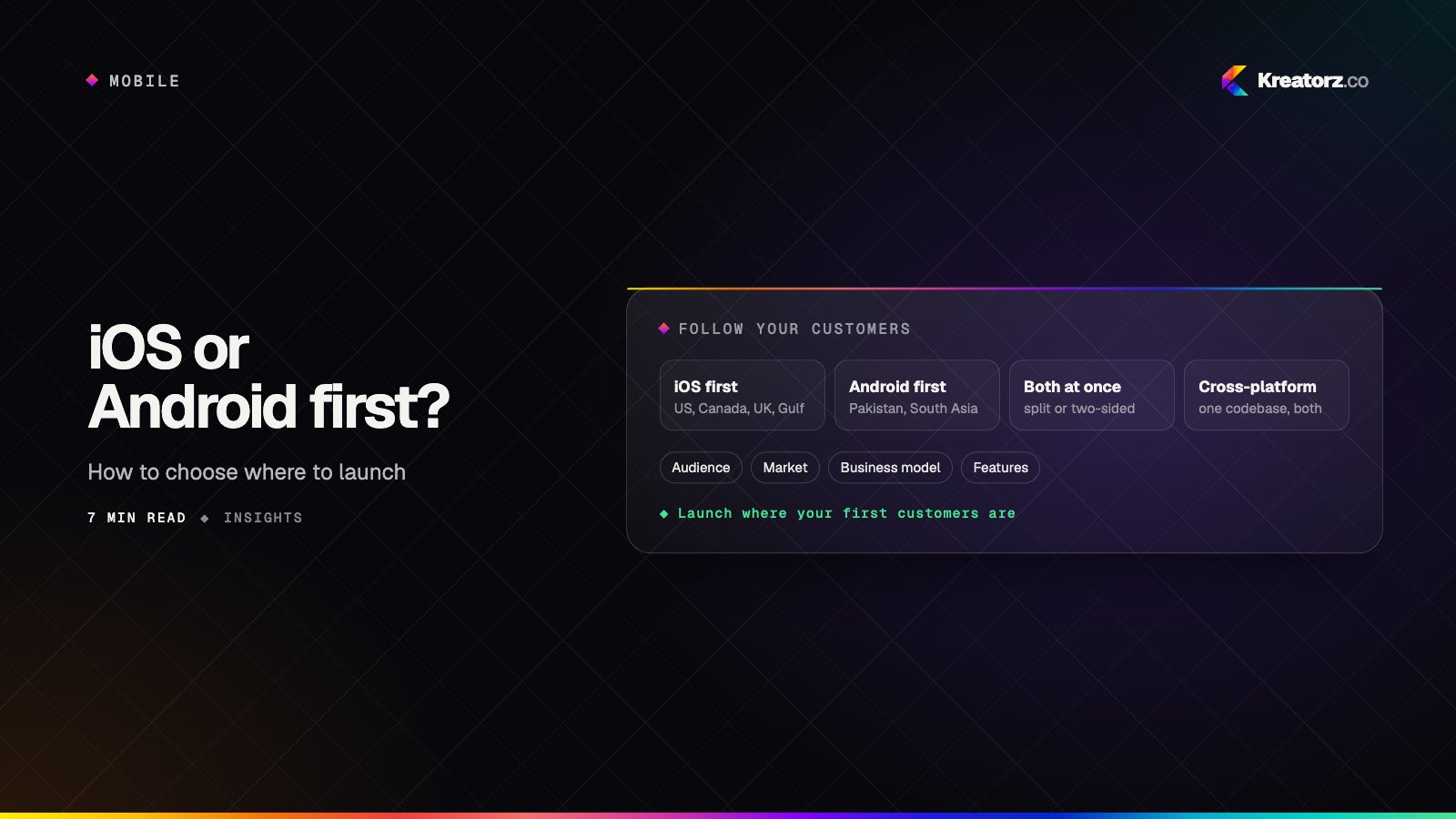
One of the first questions founders ask when planning an app is: "Should we build for iPhone or Android first?" It sounds like a technical choice, but it is really a business one. The right answer depends on who your customers are, where they live, how you plan to make money and what your app needs to do.
This guide walks through how to decide, and explains why, for many products today, the best answer is to launch on both platforms from a single codebase.
Start with your customers, not the platforms
The single most important question is: which phones do your target customers actually carry? Everything else is secondary. A brilliant iOS app is wasted if most of your customers use Android, and the reverse is just as true.
Ways to find out:
- Check the device split in your website analytics, especially for your existing customers.
- Look at your current customer base: survey them or check data from any existing app.
- Research your market and audience segment, not just national averages. Students, professionals, drivers, older users and different industries can differ sharply.
- Look at where competitors launched and where their reviews come from.
How platform share varies by market
Platform share differs a lot by country, and changes over time, so always check current data for your markets. Broadly:
| Market | General pattern |
|---|---|
| United States and Canada | iOS has a large share, especially among younger users and higher-income segments |
| United Kingdom | iOS and Android are relatively balanced, with iOS strong |
| UAE and Saudi Arabia | iOS is strong in many premium segments, with Android also widely used |
| Pakistan, India and much of South Asia | Android is used by the large majority of smartphone owners |
| Much of Africa, Latin America and Southeast Asia | Android is the majority platform |
| Globally | Android has more users overall; iOS users typically account for more app spending |
This is why a consumer app for US professionals and a delivery app for Lahore often make opposite choices.
When to launch on iOS first
iOS first often makes sense when:
- Your customers are mainly in the US, Canada, the UK or premium Gulf segments.
- You earn through subscriptions or in-app purchases. Historically, iOS users have spent more on apps, which helps you validate willingness to pay.
- You want a smaller set of devices to test. Fewer device models and faster OS adoption reduce testing effort for an early version.
- Your app depends on Apple-specific features, such as Apple Watch, certain health or wallet integrations or a strong focus on the Apple ecosystem.
When to launch on Android first
Android first often makes sense when:
- Your customers are mainly in Pakistan, South Asia or other Android-majority markets.
- You are building for a broad mass market, drivers, field workers or users on budget phones.
- Your app is for business use on company-issued Android devices, rugged devices or scanners.
- You need deeper device control or integration options that Android allows more freely, such as certain background tasks or default app roles.
- You want faster iterations in the store, since Google Play testing tracks make staged rollouts easy (both stores now support testing and phased releases).
When to launch on both at once
Launching on both platforms is the right call when:
- Your audience is split, which is common in the UK, the Middle East and many B2B products.
- You are building a two-sided product, such as a marketplace or delivery app, where customers and providers may be on different platforms.
- Your app is tied to an existing business, such as a gym, retailer or clinic, where every customer needs access from day one.
- Excluding half of your users would hurt word of mouth, for example social or community apps where friends invite friends.
How cross-platform development changes the decision
The "iOS or Android first" question came from a time when every platform needed its own separate app and team. Today, frameworks such as Flutter and React Native let one team build iOS and Android from one codebase.
For most business and consumer apps, that means:
- Launching on both costs far less than building two native apps, typically only modestly more than building one, mainly for platform testing and store work.
- Features stay in sync across platforms.
- Maintenance is simpler, since there is one codebase to update. See how much app maintenance costs.
You can still choose to launch on one platform first, for focus or testing, while building on a codebase that is ready for the other. That keeps the option open without a rebuild later.
Native development in Swift and Kotlin remains the better choice for apps that rely heavily on device hardware, advanced graphics, complex background processing or the newest platform features from day one. Our guide on choosing a mobile stack compares the options in depth.
Don't forget the web
For some products, the first platform shouldn't be a store app at all. A web app or progressive web app can be the fastest way to test an idea, especially for B2B tools, dashboards and products people use mostly on laptops. Many teams launch a web app and one mobile platform, or a web app and a cross-platform mobile app together.
A simple decision checklist
- Where are your first customers? Use real data from your audience and market.
- How will you make money? Subscriptions and in-app purchases, ads, transactions or a business contract.
- Does your app need platform-specific features? List them.
- Does your audience include both platforms in meaningful numbers? If yes, plan for both.
- Is it two-sided? If yes, both sides need access, possibly on different platforms.
- What is your budget and timeline? If tight, cross-platform with a phased launch is usually the most efficient.
- What will you learn from the first launch? Choose the platform that gets you the most useful feedback fastest.
Other launch differences to plan for
- Store review: both stores review apps before release. Plan time for review and possible resubmissions, especially for first submissions. Our guide on launching on the App Store and Google Play covers this step by step.
- Developer accounts: Apple charges an annual fee, Google a one-time registration fee, and both require verification that can take time.
- Device testing: Android needs testing across a wider range of screen sizes and manufacturers.
- Design conventions: navigation, back behavior and system controls differ, so a good cross-platform app still respects each platform's patterns.
The bottom line
There is no universally right first platform. Launch where your first customers are, consider your business model and features, and if your audience is split, launch on both. For most apps, a cross-platform codebase makes that affordable and keeps your options open.
At Kreatorz we help teams make this call with real data and build iOS and Android apps, cross-platform or native, for clients in the US, Canada, the UK, the Middle East and Pakistan. See our mobile app development service, or tell us about your app.
Frequently asked questions
Should I build my app for iOS or Android first?
Build first for the platform your target customers use. iOS is often chosen first for apps targeting the US, Canada, the UK and premium Gulf segments, and for subscription businesses. Android is usually first for Pakistan, South Asia and other Android-majority markets. If your audience is split, launch on both with a cross-platform build.
Is it cheaper to build for iOS or Android?
Costs are broadly similar for a single native app. Android can need more testing across devices, while iOS has a smaller set of devices to support. Building both with one cross-platform codebase usually costs much less than two separate native apps.
Can I launch on both iOS and Android at the same time?
Yes. Cross-platform frameworks such as Flutter and React Native let one team build both apps from a single codebase, so launching on both at once is often only modestly more effort than launching one. You still need to test on both platforms and prepare both store listings.
Which platform makes more money?
Historically, iOS users have spent more on apps and in-app purchases overall, which is why subscription apps often start on iOS. Android has more users worldwide, so apps that earn from transactions, ads or business contracts in Android-majority markets can do very well there. Your own audience matters more than global averages.
Do I need separate apps for iPhone and Android?
You need a separate app listing in each store, but not necessarily a separate codebase. A cross-platform framework produces both apps from one codebase. Separate native apps make sense when you need deep platform-specific features or maximum performance.
- Mobile app developmentWe plan, design, build and grow mobile apps for iPhone and Android — choosing the right technology for your product, not the one we happen to prefer.Explore
- iOS app developmentWe build iPhone, iPad and Apple Watch apps in Swift and SwiftUI that feel unmistakably Apple — fast, private by design and ready for App Store review.Explore
- Android app developmentWe build native Android apps in Kotlin and Jetpack Compose that perform on flagship phones and budget handsets alike — then ship them confidently through Google Play.Explore


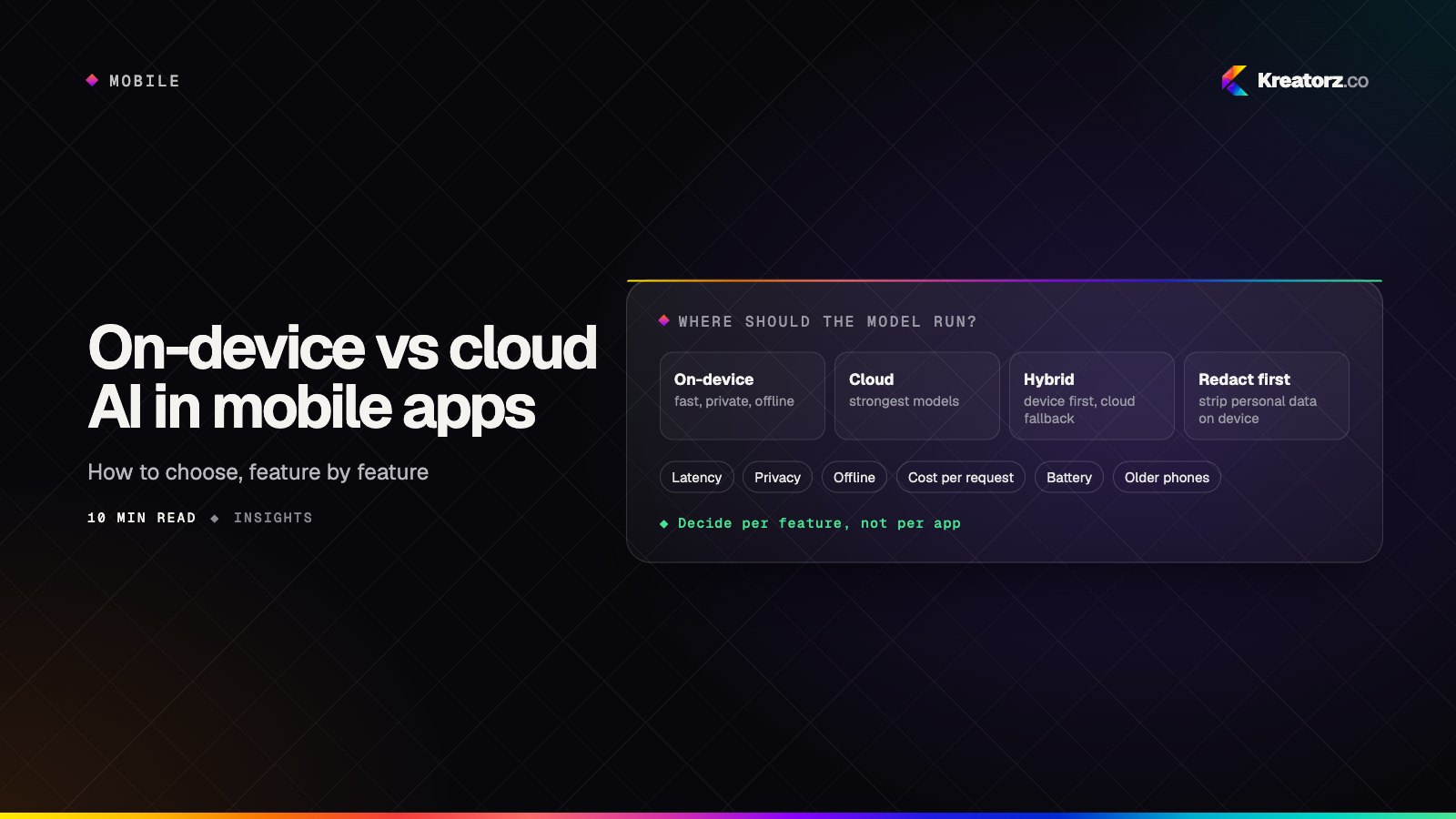
On-device vs cloud vs hybrid AI in mobile apps: how to choose
Phones can now run capable small models, and both Apple and Google offer on-device AI frameworks. That does not make the cloud obsolete. Here is a step-by-step guide to deciding, feature by feature, where the AI in your mobile app should run.
19 November 2026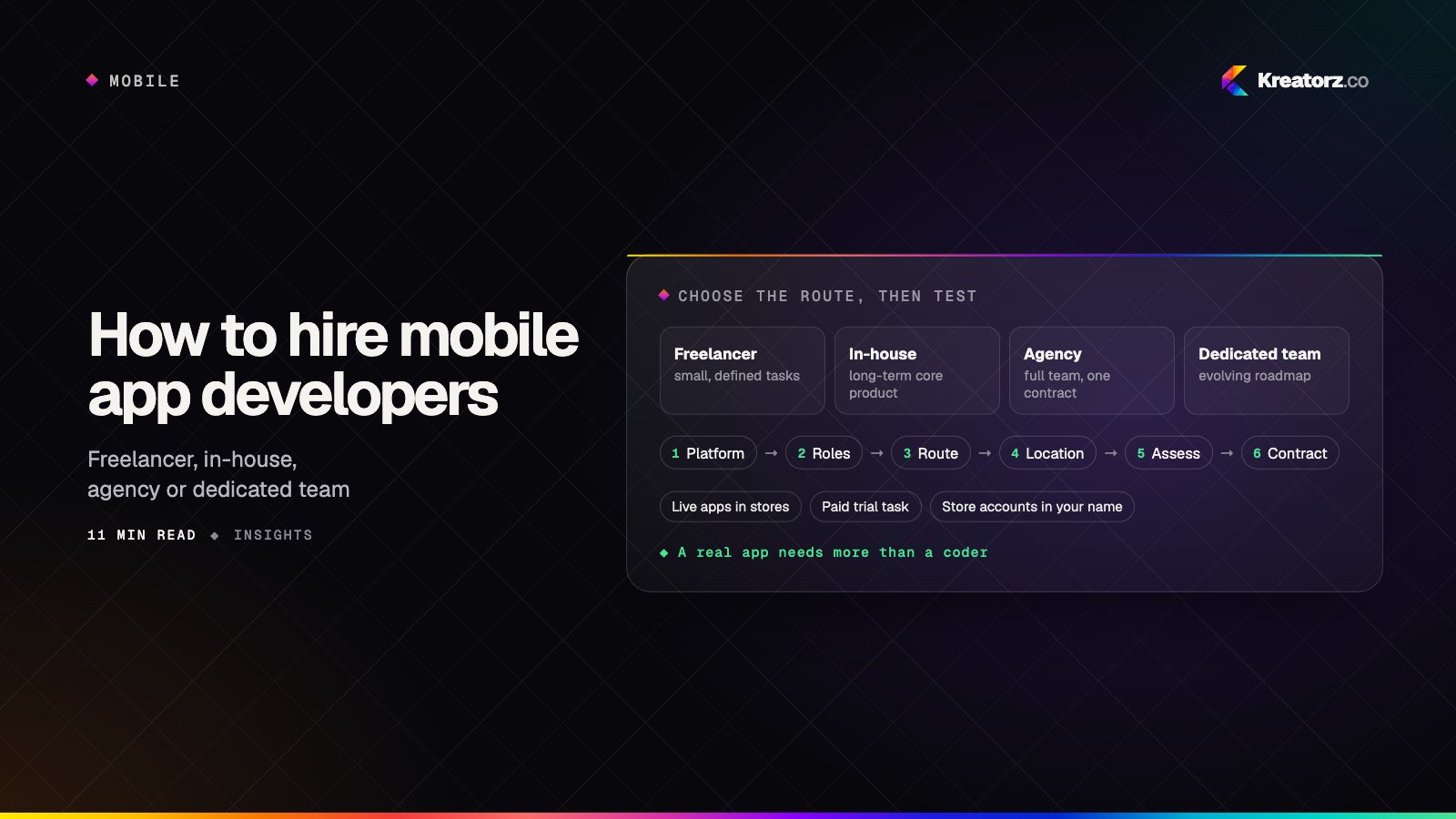
How to hire mobile app developers: a step-by-step guide
Hiring mobile app developers is about more than finding someone who can code. Here is a practical, step-by-step process for choosing between freelancers, in-house hires, agencies and dedicated teams, assessing developers properly, and protecting your app, code and store accounts.
18 November 2026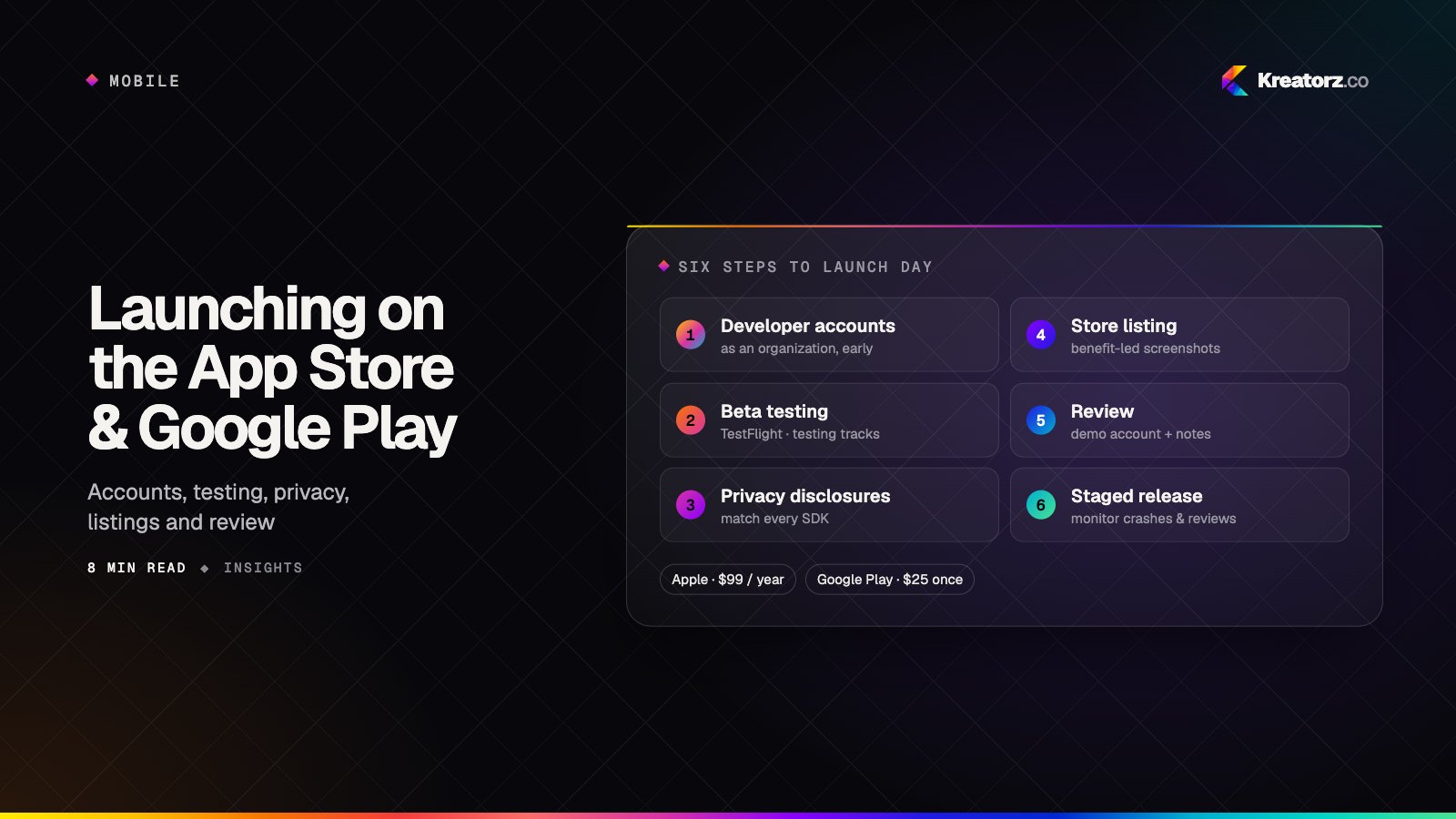
How to launch an app on the App Store and Google Play: a step-by-step guide
Getting an app approved and in front of users is a project of its own — developer accounts, testing tracks, privacy disclosures, store listings and review. Here is the launch process for both stores, the common reasons apps get rejected, and how to plan a calm launch day.
16 November 2026