How to choose a software house in Lahore: a step-by-step guide
Whether you are a Pakistani business or an overseas company hiring a team in Pakistan, here is a practical, step-by-step way to choose a software house in Lahore for your app, custom software, SaaS or AI product, plus the red flags and questions that separate strong teams from risky ones.
Short answer
To choose a software house in Lahore, write a short brief, shortlist three to five firms using verifiable evidence such as live products and references, and meet the people who will build your product. Then check their process and engineering quality, test communication and time-zone overlap, and secure IP ownership, your own accounts and milestone-based payments in the contract.
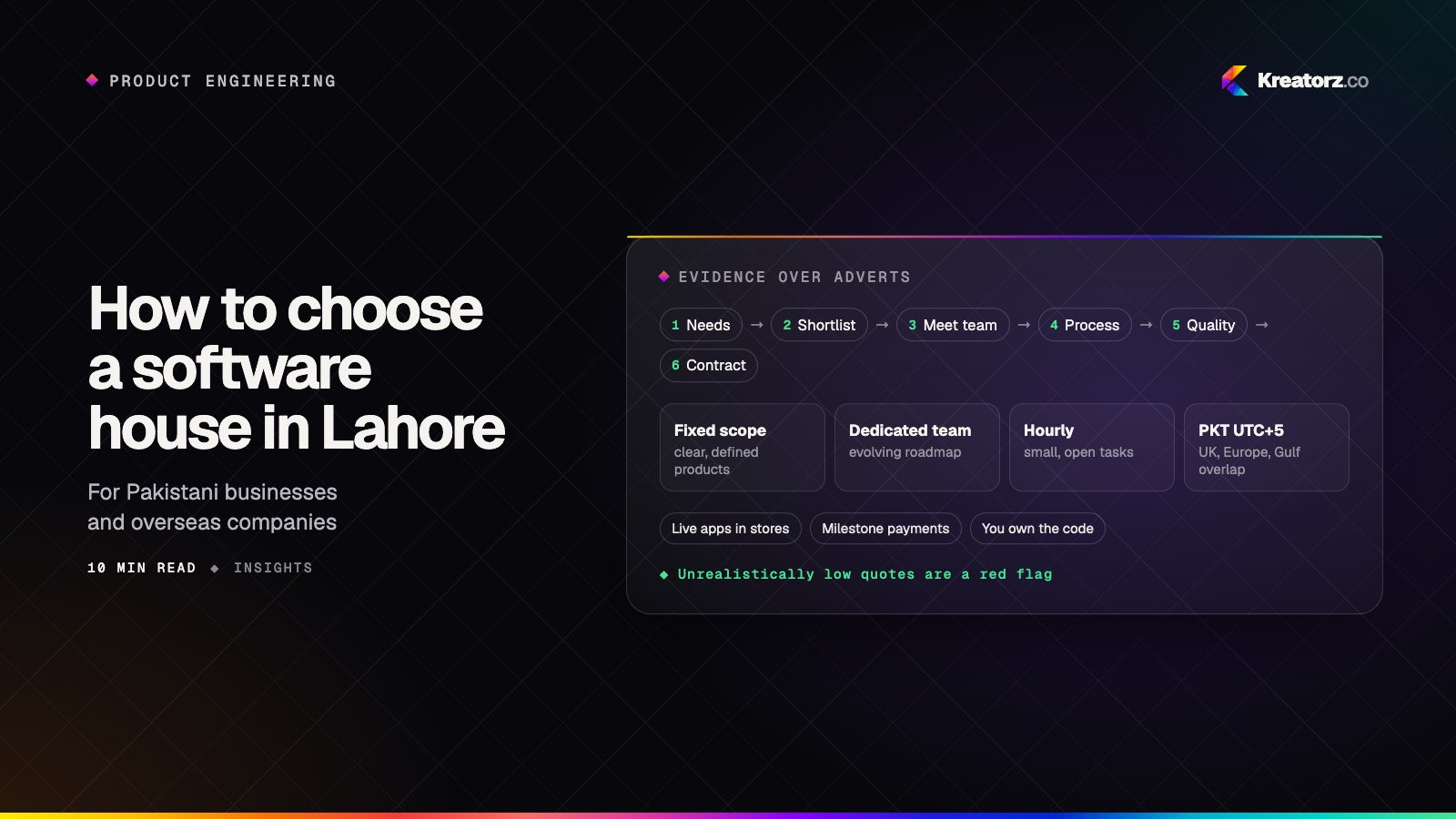
Lahore has become one of the places businesses look when they need software built: mobile apps, internal systems, SaaS platforms and, increasingly, AI products. That is true for local companies digitizing how they work, and for overseas companies that want a capable development team in Pakistan.
The challenge is not finding a software house in Lahore. It is telling the strong ones apart from the rest. Websites look similar, portfolios overlap and quotes can vary wildly for the same brief. This guide gives you a practical, step-by-step way to choose.
The steps apply equally to Pakistani businesses and to overseas companies considering a software development company in Pakistan. Where they differ, mostly around communication, contracts and payments, we call it out.
Step 1: Define what you actually need
Before you talk to anyone, write a one- or two-page brief. It doesn't need to be technical. It should cover:
- The problem and the users. Who will use the product, and what will they be able to do that they can't today?
- The type of product. A mobile app, a web platform, custom software development for internal teams, a SaaS product you will sell, or an AI feature inside something you already run.
- The first release. The handful of features that must exist at launch, separated from the "nice to have" list.
- Constraints. Deadlines, budget range, systems the software must connect to, and any compliance or data requirements.
- Who decides. One person on your side who can answer questions and approve work quickly.
A clear brief makes quotes comparable, and it reveals a lot about each software house: the good ones will push back and ask questions you hadn't thought of.
Step 2: Build a shortlist from evidence, not adverts
Search results, directories and social media will give you a long list quickly. Narrow it to three to five candidates using things you can verify:
- Live products. For an app development company in Lahore, ask for links to apps in the App Store and Google Play that the team built. Download them, check they work, and confirm with the client who built them. For mobile app development in Pakistan or anywhere else, shipped apps matter more than concept designs.
- Relevant work. Look for products similar in shape to yours: multi-user platforms, payments, real-time features, dashboards or AI. The industry matters less than the type of problem solved.
- Case studies with substance. A good case study explains the problem, the decisions made and what shipped, not just screenshots.
- References you can call. Ask for two or three past clients you can speak to directly, ideally including one from your own region if you are hiring from abroad.
- A real presence. A physical office address, a registered company and named leadership. These are easy to check and worth checking.
Step 3: Meet the people who will build your product
First meetings are often with a sales lead. Before you sign, meet the people who will actually do the work: the product or project lead, a designer, and the senior engineers who will make technical decisions.
In that conversation, look for:
- Questions about your users and business, not just your feature list.
- Honest pushback. A team that suggests cutting a feature to launch sooner is thinking about your outcome.
- Named people and roles. You should know who will be on your project, how much of their time you will get, and who replaces them if they leave.
- Seniority where it counts. Junior developers are part of most healthy teams, but architecture, security and code review should sit with experienced engineers.
If a software house cannot tell you who will build your product, treat that as a serious warning sign.
Step 4: Check how they run a project
A reliable process is what turns a good team into a predictable one. Ask each candidate to walk you through a recent project, step by step. A mature process usually includes:
- Discovery. A short, structured phase to map users, features, risks and architecture before committing to a full estimate.
- Design before code. Clickable user flows and screens you approve before engineering starts, when changes are still cheap.
- Short build cycles. Working software delivered in sprints of one to two weeks, with a demo at the end of each.
- A shared backlog. You can see what is planned, in progress and done at any time.
- Launch and handover. App store submission, deployment, monitoring, documentation and a clear plan for after launch.
The single most useful question here is: "How often will I see working software?" If the answer is "at the end" or "after the design phase is finished," you will be taking on a lot of risk with little visibility.
Step 5: Assess engineering quality
You don't need to be technical to probe engineering quality. Ask how the team handles:
- Code review. Is every change reviewed by another engineer before it is merged?
- Testing. What is tested automatically, what is tested manually, and who is responsible for quality assurance?
- Security. How do they handle passwords, personal data, access controls and secrets such as API keys? Have they built anything that needed a security review?
- Environments and releases. Are there separate development, staging and production environments? How are releases deployed and rolled back?
For AI products, add a few more. An AI development company in Pakistan, or anywhere else, should be able to explain how it evaluates AI output, prevents the model from inventing answers, protects your data, and keeps usage costs under control. If the answer to "how do you know the AI is good enough?" is a demo, keep asking. See our AI app development page for what a fuller approach looks like.
If you have a technical adviser, ask for a short architecture walkthrough or a code sample.
Step 6: Test communication and time-zone overlap
Communication causes more project failures than technology does, especially when you are working with a team in another country.
Lahore runs on Pakistan Standard Time (UTC+5), with no daylight saving changes. In practice:
- UK and Europe share a good part of the working day with Lahore, which makes daily calls straightforward.
- The Gulf is only one or two hours behind Lahore, so working hours line up closely.
- North America has little or no natural overlap. Ask how the team handles this: some schedule a few hours of overlap in your morning or their evening, and some have staff or partners working in North American hours.
Whatever your location, agree upfront on:
- a regular rhythm of updates and demos;
- which tools you will use for messages, tasks and documents;
- how quickly you can expect replies, and who to contact when something is urgent;
- how bad news is shared, because delays and problems happen on every project.
If a team is slow or vague before you have signed, it rarely improves afterward.
Step 7: Get contracts, IP and payments right
This step matters for everyone, and especially for overseas companies hiring a software development company in Pakistan. Before work starts, make sure you have:
- An NDA, if you are sharing sensitive ideas or data during discovery.
- Clear intellectual property terms. The contract should state that you own the source code, designs and other work you pay for, without conditions that let the vendor hold it back.
- Access from day one. The code repository, cloud hosting, domains and App Store and Google Play accounts should be in your name, with the team given access. Not the other way around.
- Milestone-based payments tied to delivered, demonstrable work rather than large upfront sums.
- Defined acceptance criteria, so both sides agree what "done" means for each milestone.
- A warranty period for fixing defects after launch, and clear terms for ongoing support.
- A fair exit clause, including a handover of code and documentation if either side ends the engagement.
For cross-border work, also confirm which legal entity you are contracting with, which country's law governs the agreement, and how payments will be handled.
Step 8: Understand the pricing model before you compare prices
Software houses in Lahore typically offer three ways to work. Each suits a different situation.
| Model | Best for | Watch out for |
|---|---|---|
| Fixed scope | MVPs and well-defined products with a clear first release | Rigid change processes; quotes padded to cover unknowns, or missing work that turns into change requests |
| Dedicated team | Products with an evolving roadmap and ongoing development | Make sure you know exactly who is on the team and can see their output each sprint |
| Hourly / time and materials | Small pieces of work, audits or uncertain scope | Costs are open-ended unless you set a budget cap and review progress regularly |
When comparing quotes, compare the team, the number of weeks and the scope, not just the total. Two quotes with the same price can describe very different products. And a lower rate isn't automatically cheaper if the work takes longer or needs rework. Our guides on how much it costs to build an app and how long it takes to build an app explain what drives budgets and timelines.
Red flags to walk away from
Some warning signs are worth taking seriously, whichever software house you are talking to:
- No working demos. They can show designs and slides but not live products or builds you can use.
- They can't name who will build your product, or the team you meet keeps changing.
- They resist code ownership, want to keep the repository or app store accounts in their name, or make handover conditional.
- An unrealistically low quote, especially one produced without asking many questions. It usually means missing scope, inexperienced developers, or a price that will grow later.
- No questions about your users or business, only about features and deadlines.
- Reluctance to give references you can speak to.
Questions to ask every software house in Lahore
Use these in your meetings and compare the answers side by side:
- Can you show me two or three live products you built that are similar to mine?
- Who exactly will work on my project, and how much of their time will I get?
- How often will I see working software, and how do demos work?
- What does your discovery phase include, and what will I receive at the end of it?
- How do you review code, test, and handle security and personal data?
- Who owns the code, designs and accounts, and when are they transferred?
- What are our overlapping working hours, and how will we communicate day to day?
- How do you handle changes in scope, and what happens after launch?
- Can I speak to two of your past clients?
For a broader, location-independent checklist, including how to evaluate discovery and contracts in more depth, see our guide to choosing a software development partner.
Where Kreatorz fits
Kreatorz is a software house in Lahore, with our office at 129-B NB Cantt, and further offices in Sheridan, Wyoming (USA) and Brantford, Ontario (Canada), where our team works on Eastern Time. We work as one senior, cross-functional team across product, design, mobile app development, web, backend and AI. Clients own their code from day one, and we share working builds every one to two weeks with weekly demos.
If you are shortlisting software houses in Lahore and want a second opinion on your brief, or a clear plan for a first release, get in touch. We're happy to talk it through, even if you end up working with someone else.
Frequently asked questions
How do I verify a software house in Lahore is legitimate?
Check for a registered company, a physical office address and named leadership. Ask for live products in the App Store, Google Play or on the web that you can confirm the team built, and speak directly to two or three past clients. Make sure the contract names the legal entity you are hiring and sets out code ownership clearly.
What should I look for in a software development company in Pakistan?
Look for live, relevant products; a senior team you can meet; a clear process with discovery, design and short build cycles; solid engineering practices such as code review, testing and security; good communication with real time-zone overlap; and a contract that gives you full ownership of your code and accounts.
Is it safe for overseas companies to hire a software house in Pakistan?
It can be, if you take the same precautions you would with any vendor. Use an NDA where needed, make sure the contract assigns intellectual property to you, keep code repositories and cloud and store accounts in your own name, and tie payments to delivered milestones. Start with a discovery phase or a small first milestone to test the working relationship.
How much does it cost to hire an app development company in Lahore?
It depends on the scope, platforms, integrations, AI features and the team involved. Rates are one part of the picture; the number of people and weeks matters just as much. The most reliable way to get an accurate figure is a short discovery phase that produces a written scope, timeline and team plan. Our guide to app development costs explains the main drivers.
How long does it take to build an app with a Lahore software house?
Simple apps often take around two to three months, medium-complexity apps around three to six months, and complex platforms six months or more, usually in phases. These timelines depend on scope and how quickly decisions are made, not on location. See how long it takes to build an app for a phase-by-phase breakdown.
- Software house in Lahore, PakistanWe design, build and scale mobile apps, web platforms, SaaS products and AI software for businesses in Pakistan and for companies abroad that want a senior team in…Explore
- Mobile app developmentWe plan, design, build and grow mobile apps for iPhone and Android — choosing the right technology for your product, not the one we happen to prefer.Explore
- Custom software developmentWe design and build web platforms, internal tools, customer portals, mobile apps and AI-powered systems that fit your business — instead of bending your business to…Explore


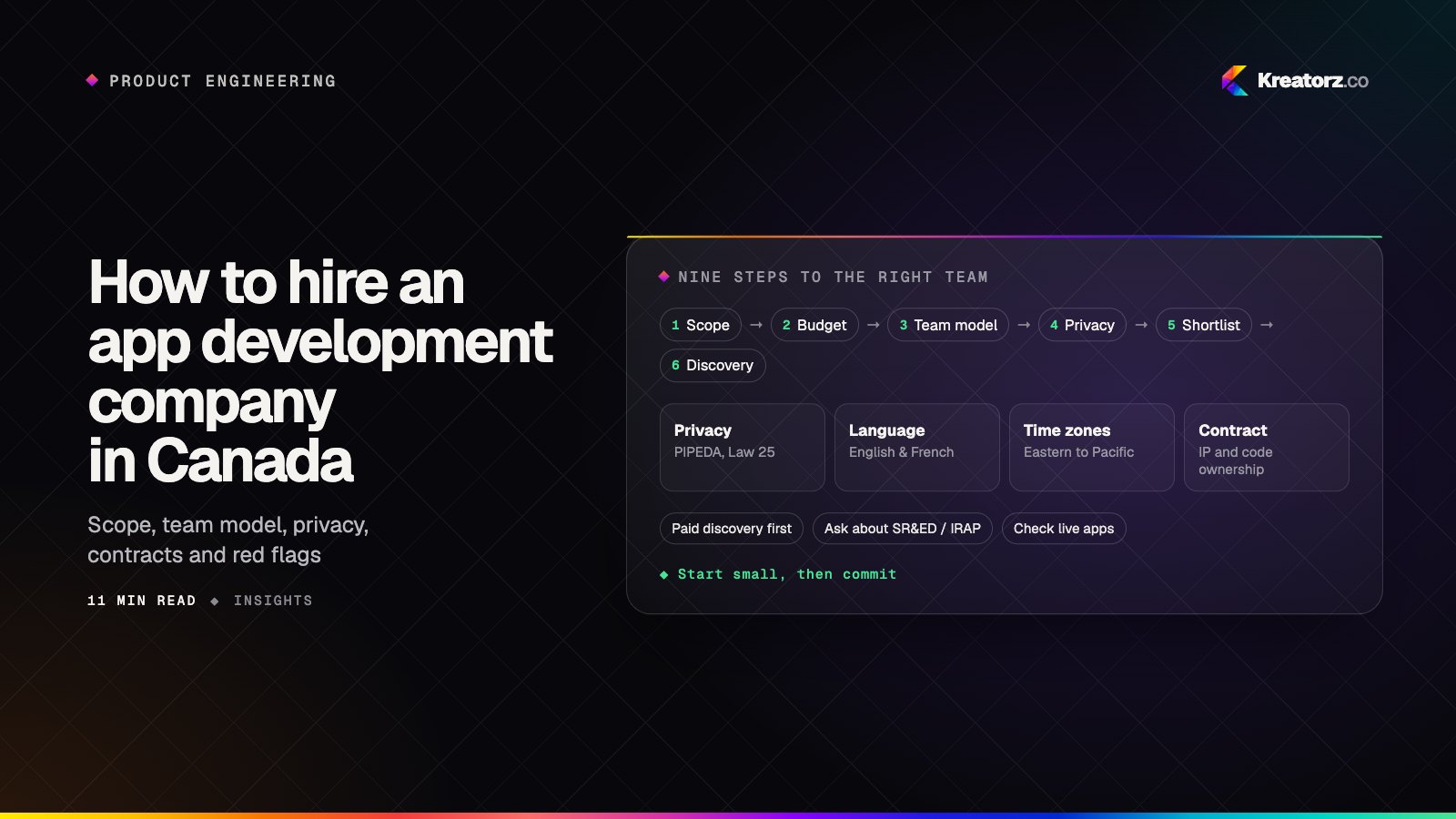
How to hire an app development company in Canada: a step-by-step guide
Hiring a team to build your mobile app, SaaS platform or AI product is a big decision. Here is a practical, step-by-step process for Canadian founders and businesses, from scoping and team models to privacy, contracts, IP and the red flags worth walking away from.
17 November 2026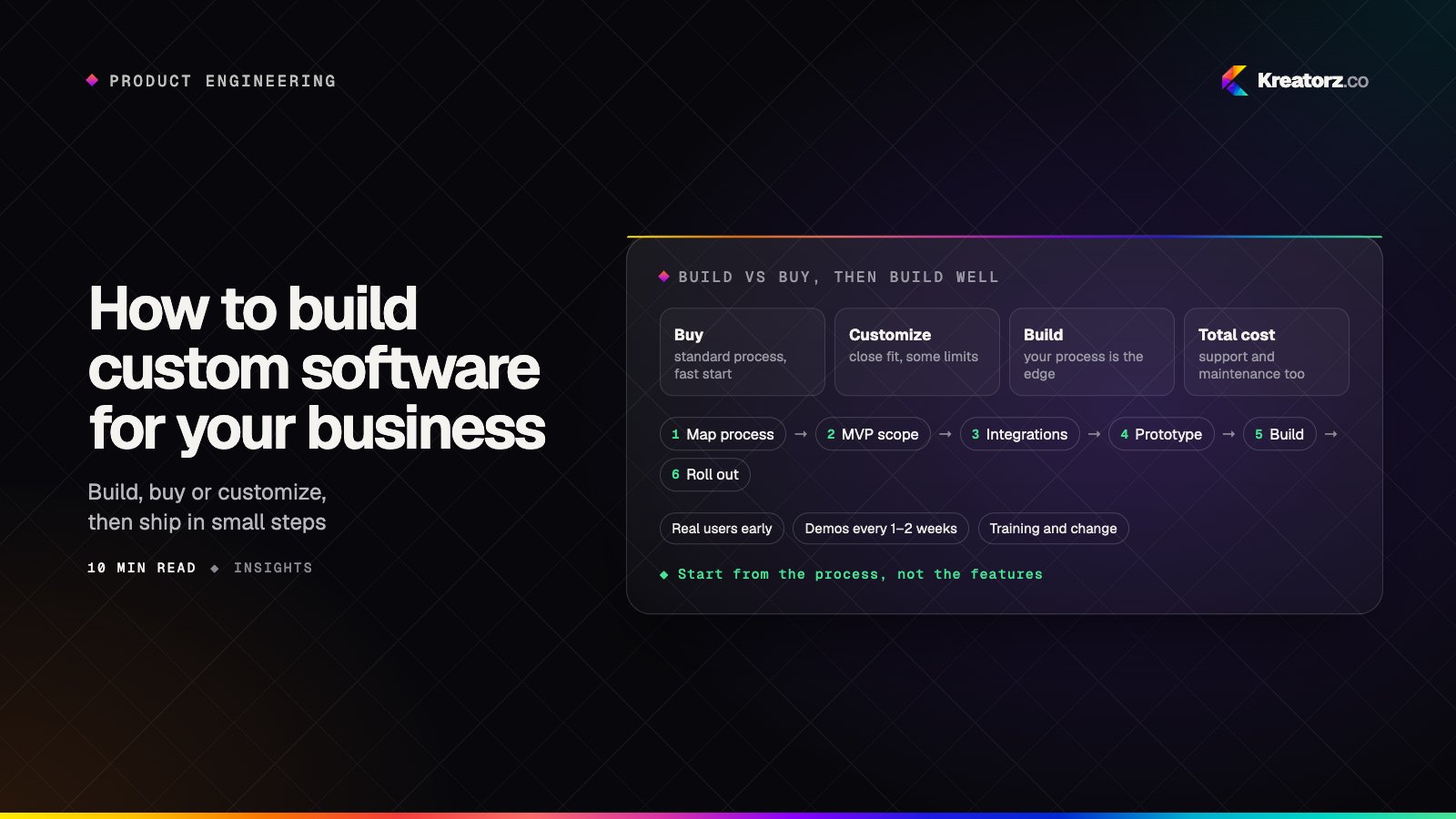
How to build custom software for your business: a step-by-step guide
Custom software can remove the spreadsheets, re-keying and workarounds that slow a business down, but only if it is planned around real processes and real users. Here is a practical, step-by-step way to decide whether to build, scope a first release, choose a partner and keep the system healthy after launch.
18 November 2026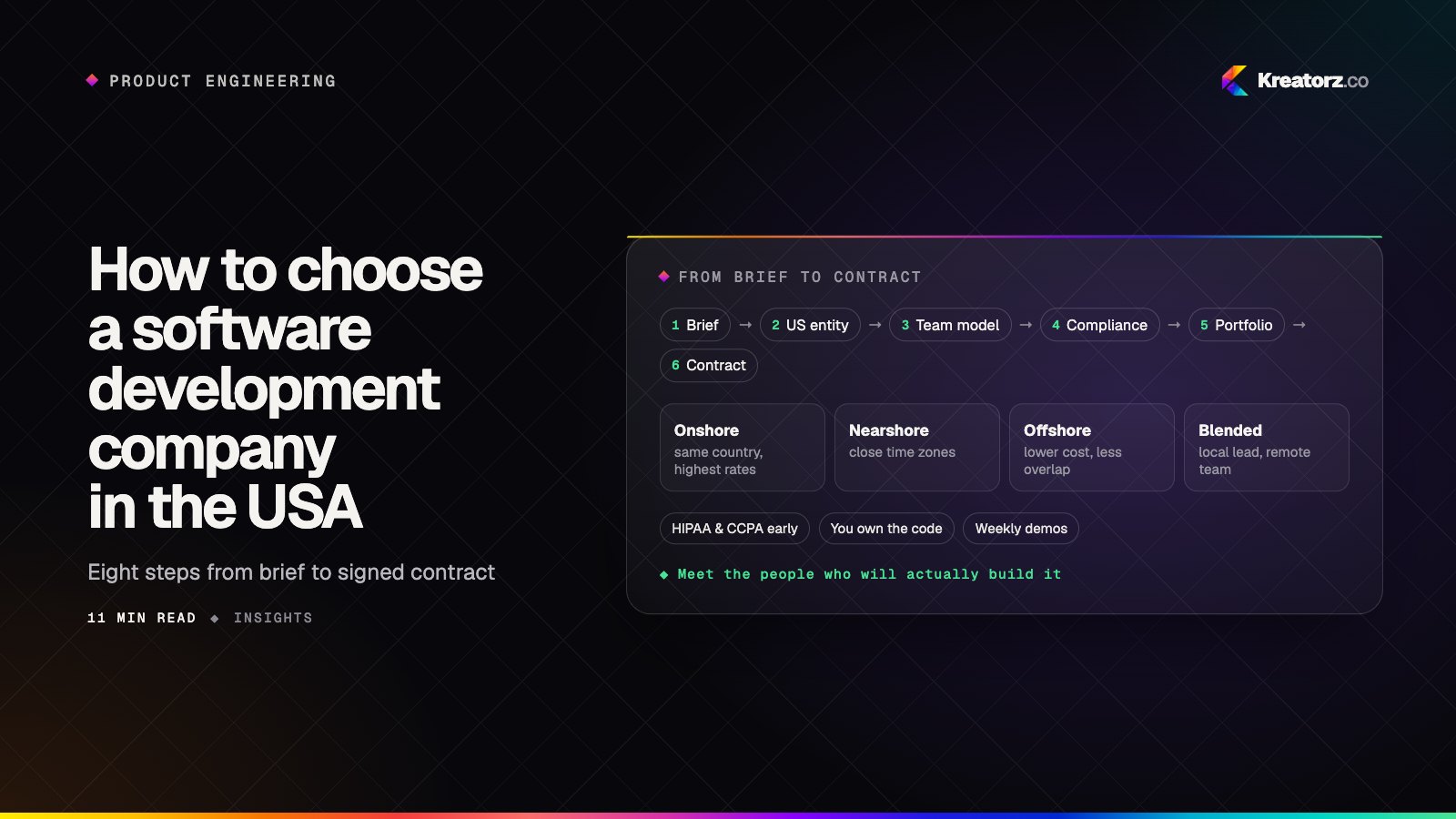
How to choose a software development company in the USA: a step-by-step guide
Hiring a company to build your app, SaaS platform or AI product is a big decision. Here is a practical, step-by-step way for US founders and businesses to compare software development companies, from contracts, time zones and compliance to pricing models, portfolios and red flags.
17 November 2026