How much does it cost to build an app? A practical guide for 2026
There is no single price for an app, but there is a reliable way to reason about it. Here is what actually drives app development cost, how complexity tiers compare, how to estimate a budget yourself and how to reduce cost without cutting quality.
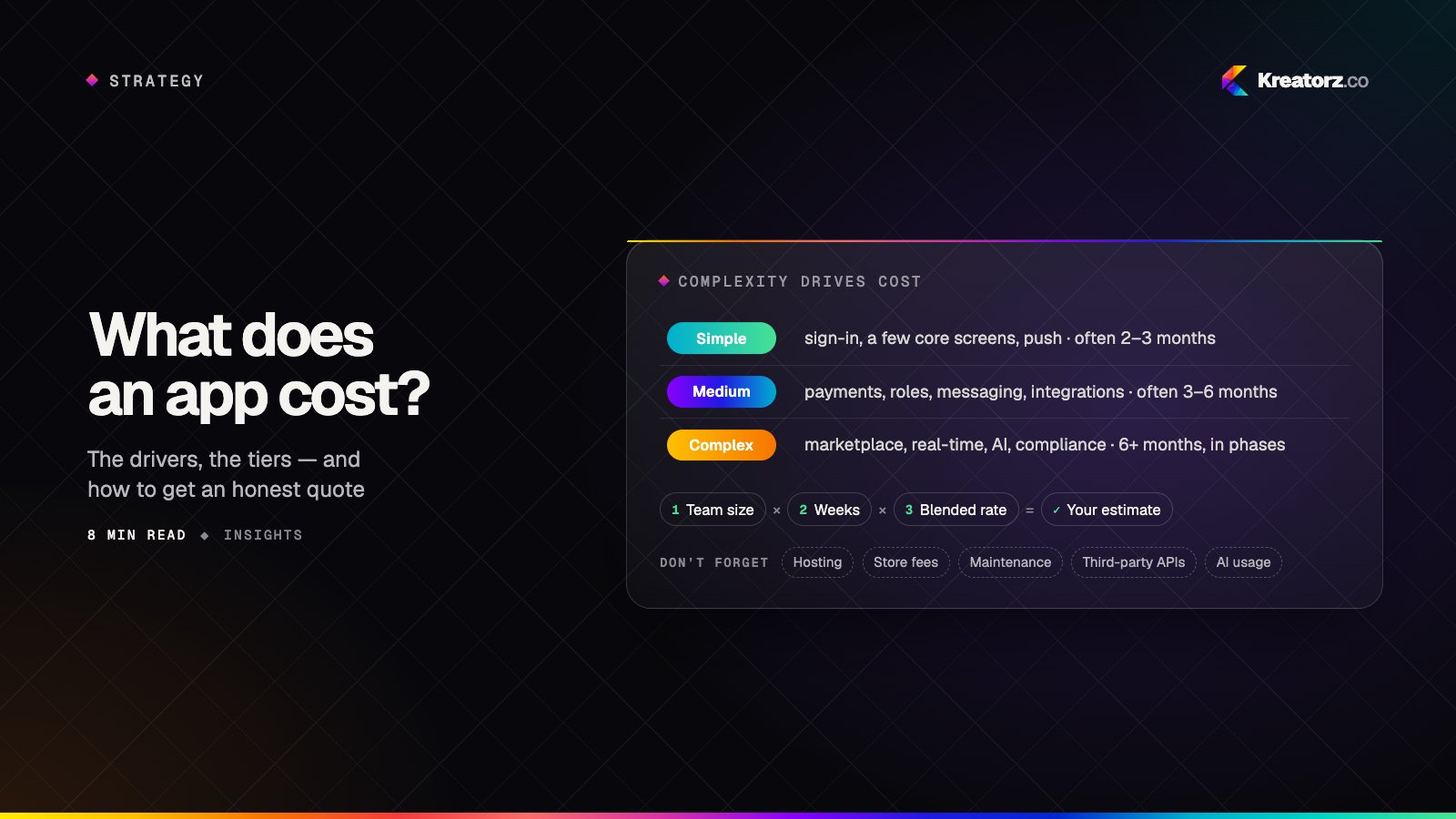
"How much does it cost to build an app?" is usually the first question a founder asks, and the honest answer — "it depends" — is also the least useful. An app can be a focused tool built by a small team in a couple of months, or a multi-sided platform that takes a larger team the best part of a year. The good news is that the cost is not a mystery. It follows from a handful of decisions you can understand, influence and plan for.
This guide explains what really drives app development cost, how simple, medium and complex apps differ, how to produce a rough estimate yourself, which costs people forget, and how to bring the number down without building something you will regret.
What drives the cost to build an app
Every app budget is ultimately people × time. Everything below matters because it changes how many people you need, or for how long.
Scope and features
Features are the biggest lever. Each one carries design, front-end, back-end, testing and edge cases — and features interact. Adding payments is not one feature; it is checkout, receipts, refunds, failed payments and an admin view to sort out problems. The most expensive words in a brief are often "and also".
Platforms: native, Flutter or React Native
Building separate native apps for iOS and Android means two codebases, two sets of specialists and two sets of bugs. A cross-platform framework such as Flutter or React Native lets one team ship both from a single codebase, so a cross-platform app is usually cheaper than two native apps of the same scope. Native still earns its place for heavy use of device hardware, demanding graphics or deep platform integrations. We compare the trade-offs in more detail in choosing a mobile stack.
Design depth
A clean interface built on a well-tested component library is far quicker than a bespoke visual language with custom animations and illustrations. Both are valid; the second simply costs more design and engineering time, and should be a deliberate choice rather than a default.
Backend and integrations
Most of an app's cost is invisible. Accounts, data storage, notifications, an admin panel, and integrations with payment providers, maps, calendars, CRMs or legacy systems all live behind the screens. Each third-party integration adds work for authentication, error handling and testing — and is only as reliable as the API you are connecting to.
AI features
Adding AI — a chat assistant, document understanding, recommendations, image analysis — involves more than calling a model. You need prompt and retrieval design, evaluation to check answers are good enough, guardrails, fallbacks when the model is wrong, and monitoring of usage costs. Done properly, AI features add meaningful engineering time and an ongoing running cost per user.
Compliance and security
Apps that handle health, financial or children's data, or that operate in regulated markets, need extra work: data protection reviews, consent flows, audit logs, encryption, access controls and sometimes external assessments. This is not optional, and it is much cheaper to plan for than to retrofit.
Team location and engagement model
Rates vary widely by country and by model — freelancers, an in-house hire, a local agency or a distributed team. A lower rate is not automatically cheaper: an experienced team that needs fewer weeks and less rework often costs less overall. Our guide to choosing a software development partner covers what to look for beyond the hourly figure.
App complexity tiers compared
Most projects fall into one of three broad tiers. Timelines are indicative only; your scope, integrations and decision speed will move them.
| Tier | Typical features | Typical team shape | Typical timeline | Relative cost |
|---|---|---|---|---|
| Simple | Sign-in, a few core screens, basic data storage, push notifications, simple admin | Product designer plus one or two developers, with part-time QA and project lead | Often around 2–3 months | Lowest |
| Medium | Payments or subscriptions, user profiles and roles, messaging, third-party integrations, a fuller admin panel, analytics | Designer, two to four developers across mobile and backend, QA, product lead | Often around 3–6 months | Moderate |
| Complex | Multi-sided marketplace or platform, real-time features, AI capabilities, complex workflows, compliance requirements, multiple apps (customer, provider, admin) | Larger cross-functional team, often including backend, DevOps and AI specialists | Often 6 months or more, usually in phases | Highest |
To make the tiers concrete: a pantry and grocery-list app such as GrocEase, which we built, sits at the simpler end of the spectrum in concept, while an on-demand delivery platform such as YaFi — connecting customers, local stores and riders with real-time order tracking and a digital wallet — is a multi-sided product that belongs in the complex tier. The difference is less about the number of screens and more about the number of parties, workflows and integrations involved.
How to estimate app development cost yourself
You can build a sensible first estimate with one formula:
Estimated build cost = team size × number of weeks × blended weekly rate
- List the features for your first release and group them into the tiers above.
- Choose a team shape that fits the tier — for example, one designer, two developers and part-time QA.
- Estimate the weeks, including discovery, design, build, testing and store submission. Add a buffer for unknowns; integrations and AI features deserve a larger one.
- Apply a blended rate — the average weekly cost of the people on the team, which depends entirely on the region and model you choose.
The rate is the variable you should treat most carefully, because it hides the largest differences. Two quotes with the same total can represent very different teams, and two teams with very different rates can arrive at similar totals once speed and rework are included. Always compare the team, the weeks and the scope, not just the final figure.
Hidden and ongoing costs of running an app
The build is only the beginning. Budget from the start for:
- Hosting and infrastructure — servers, databases, file storage, content delivery and backups, which grow with your user base.
- App store fees — the Apple Developer Program costs $99 a year, and a Google Play developer account has a one-time $25 registration fee. Both stores also take a commission on digital goods and subscriptions sold in-app.
- Maintenance — fixing bugs, updating dependencies and keeping up with new iOS and Android releases, which can break things that worked last year.
- Feature updates — your first release will teach you what users actually need, and acting on it is a continuing cost.
- Third-party APIs and services — maps, SMS, email, payments, analytics and authentication providers often charge per use or per seat.
- LLM usage — AI features carry a per-request cost that scales with users and usage. Track it per feature and design limits and caching early.
- Monitoring and support — error tracking, uptime alerts and someone responsible for responding when things go wrong.
A useful habit is to plan a yearly running budget alongside the build budget, so a successful launch does not become a financial surprise.
How to reduce the cost to build an app without cutting quality
Start with an MVP
The single most effective saving is building less, first. A focused minimum viable product tests whether people want what you are building before you invest in everything else. Our article on going from idea to MVP in weeks explains how to choose what goes in, and our MVP development team helps founders scope a first release around the riskiest assumption rather than the longest wish list.
Go cross-platform where it fits
For most consumer and business apps, Flutter app development or React Native development delivers iOS and Android from one codebase and one team. That reduces build cost and, just as importantly, ongoing maintenance.
Reuse proven services
Do not build what you can rent reliably. Managed authentication, payments, notifications, hosting and analytics let your budget go into the features that make your product different.
Be deliberate about design and AI
Use an established design system and spend custom design effort on the moments that matter most. Introduce AI where it solves a real user problem; when it does, invest properly in AI app development practices such as evaluation and cost controls rather than bolting on a chatbot.
Make decisions quickly
Slow feedback, shifting priorities and unclear ownership quietly add weeks. A single decision-maker and a regular review rhythm are among the cheapest optimisations available.
How to get an accurate app development quote
A reliable quote comes from a short discovery phase, not a one-line brief. In discovery, a good partner will:
- clarify your users, goals and the problem the app must solve;
- map the core user journeys and list features by priority;
- identify integrations, data, compliance and AI requirements;
- recommend platforms and architecture;
- produce a phased plan with a team shape, timeline and the assumptions behind the estimate.
Come prepared with your target users, competitors or reference apps you admire, any existing systems the app must connect to, and a clear sense of what must be in the first release versus what can wait. Be wary of any fixed quote produced without these questions being asked — it is either padded or missing something.
If you would like help scoping a mobile app or turning a feature list into a realistic plan, get in touch. We are happy to talk through your idea and what a sensible first release might look like.
Frequently asked questions
How much does it cost to build an app in 2026?
It depends on scope, platforms, integrations, AI features, compliance needs and who builds it. The most reliable way to estimate is team size × weeks × blended rate, based on a prioritised feature list. A discovery phase turns that into an accurate quote.
How long does it take to build an app?
Simple apps often take around two to three months, medium-complexity apps around three to six months, and complex platforms six months or more, usually delivered in phases. A focused MVP can shorten the time to your first launch considerably.
Is it cheaper to build with Flutter or React Native than native?
Usually, yes. A cross-platform framework lets one team ship iOS and Android from a single codebase, which reduces both build and maintenance effort. Native development still makes sense for apps that depend heavily on device hardware, advanced graphics or platform-specific features.
What ongoing costs should I budget for after launch?
Plan for hosting, app store developer fees, maintenance and OS updates, new features, third-party API charges, AI model usage if relevant, and monitoring and support. These continue for as long as the app is live.
Do AI features make an app more expensive?
They add engineering work — prompt and retrieval design, evaluation, guardrails and monitoring — and a usage-based running cost. Scoped carefully and introduced where they solve a real problem, they can be well worth it.
How can I get an accurate estimate for my app?
Start with a short discovery phase. Share your users, goals, must-have features, integrations and any compliance requirements, and ask for a phased plan that shows the team, timeline and assumptions rather than a single number.
Related services
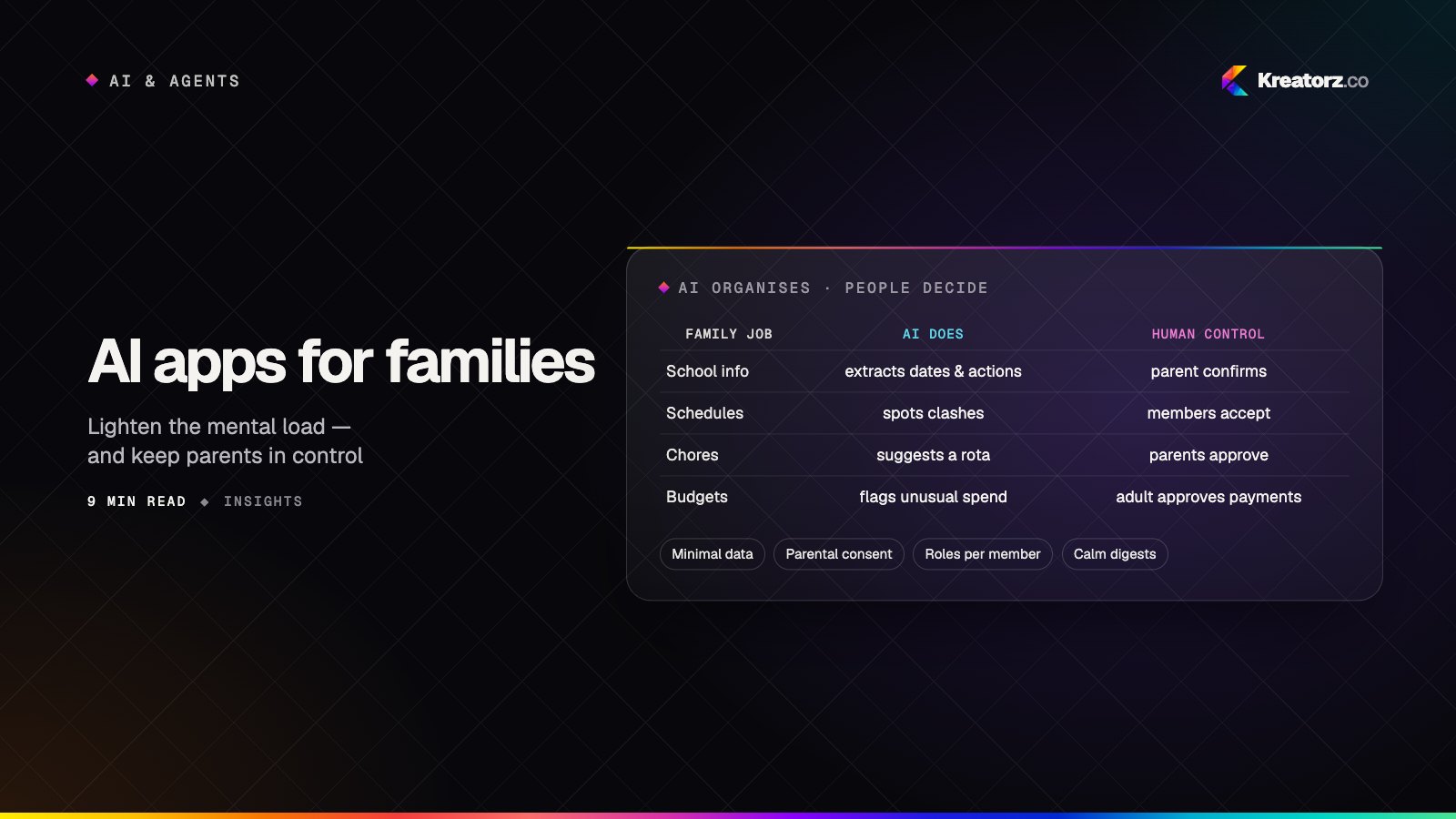
AI apps for families: how to build a family app parents actually trust
Families are drowning in schedules, school emails and small decisions. AI can genuinely lighten that load — if it is designed around real household jobs, several family roles, children's privacy and clear human control. A guide for product teams.
15 November 2026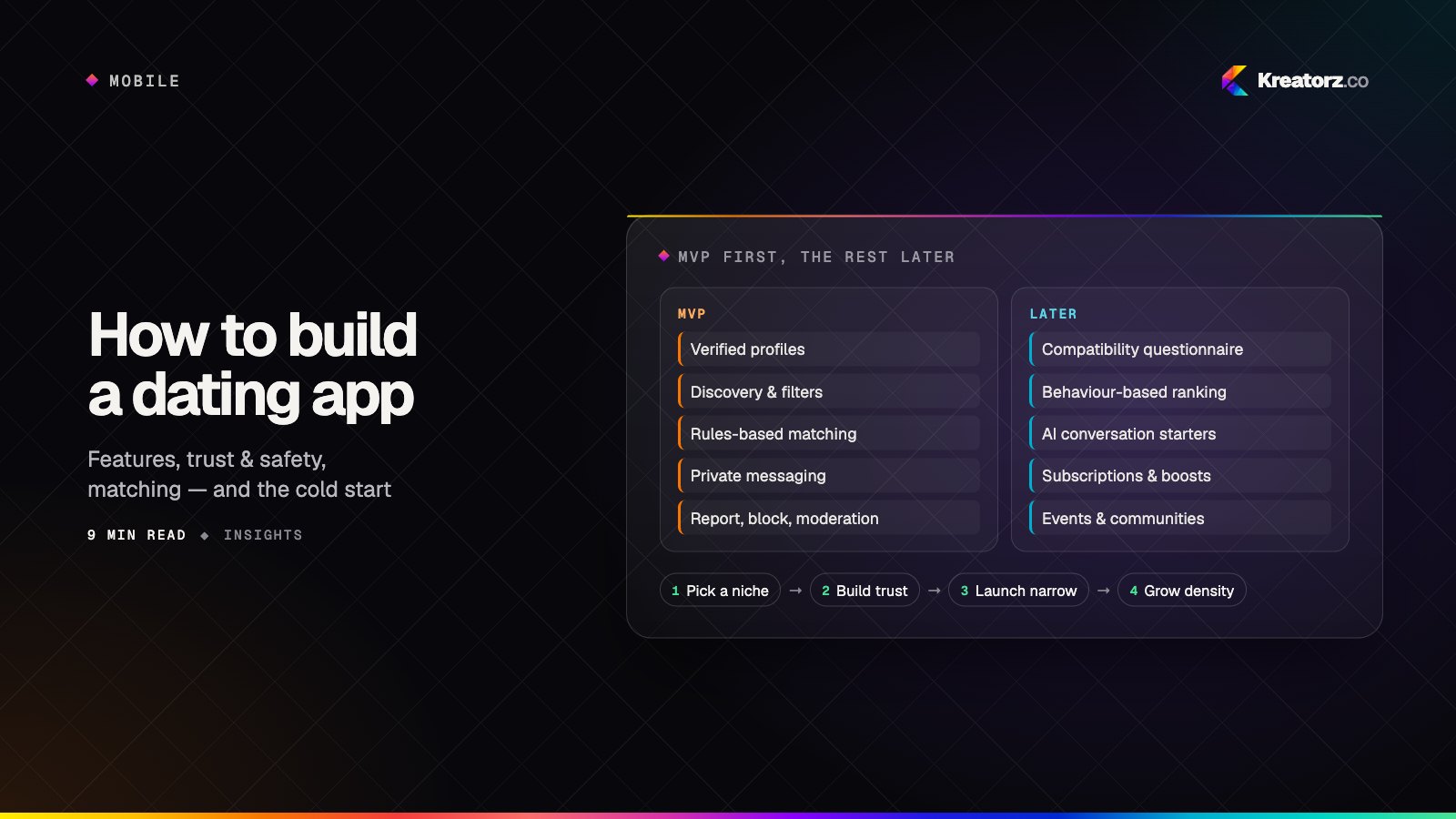
How to build a dating app: features, safety, matching and MVP scope
Building a dating app is less about copying swipe mechanics and more about trust, density and a clear audience. Here is a practical guide to features, matching, safety, privacy, monetisation and what to ship first.
15 November 2026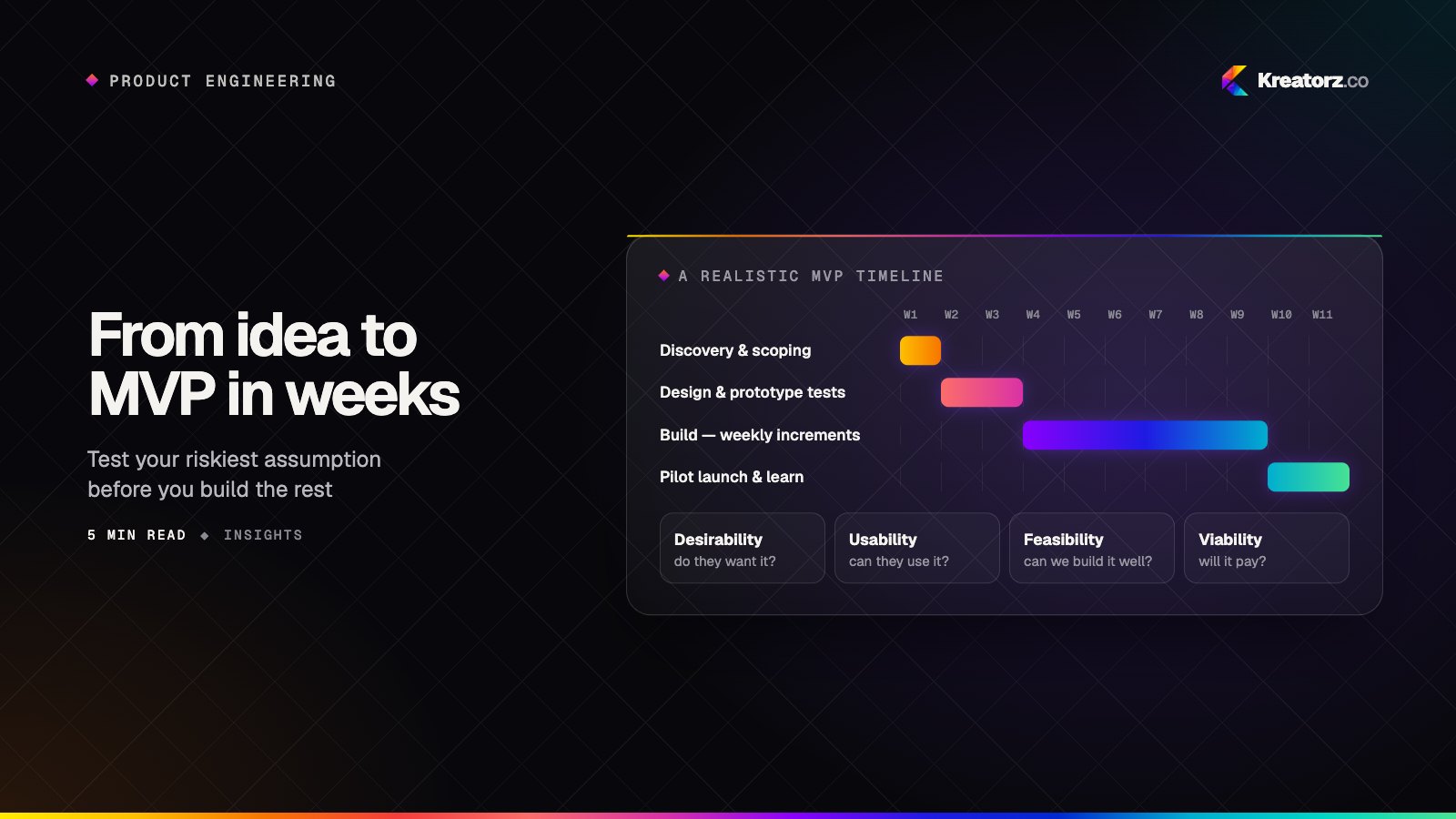
From idea to MVP in weeks: how to de-risk a new product
A minimum viable product is not a smaller version of the final product — it is the fastest honest test of your riskiest assumption. Here is the process we use to launch quickly without building the wrong thing.
14 October 2026