An MVP is not a cheaper version of your full product. It is an experiment: the smallest thing you can put in front of real users to learn whether your idea deserves more time and money. Kreatorz is an MVP development company that helps founders design that experiment properly — deciding what to build, what to leave out and how to tell whether it worked.
Our role is to find the middle ground: a product small enough to ship quickly, complete enough to deliver real value, and engineered well enough that you do not have to throw it away when it succeeds.
What a minimum viable product should prove
Before we discuss screens or technology, we agree on the riskiest assumptions behind your business. Typically these fall into four groups:
- Problem — do enough people genuinely have this problem, and do they care about it?
- Solution — does your approach actually solve it in a way they prefer to the alternatives?
- Willingness to pay — will users pay, or will a business buy, at a level that supports a company?
- Reach — can you get the product in front of the right people at a sensible cost?
Each feature in the MVP should exist to test one of these assumptions. If a feature does not help you learn something important, it waits.
Prototype, MVP or full product?
Founders often use these terms interchangeably, but they serve different purposes.
| Clickable prototype | MVP | Full product | |
|---|---|---|---|
| Purpose | Test understanding and desirability | Test real behaviour and value | Serve and grow a proven market |
| Real users | Interviews and usability sessions | Yes, in production | Yes, at scale |
| Working backend | No | Yes, focused | Yes, comprehensive |
| Typical use | Pitching, early feedback | First customers, first revenue | Growth and expansion |
Prototype development is often the right first step when the concept is still fuzzy; it is quick to change and excellent for investor conversations. Once you know what to build, the MVP puts it in people's hands.
Our MVP development services for startups
Discovery and scoping sprint
A short, intensive phase where we map your users, assumptions, competitors and constraints, then produce a prioritised scope, a recommended stack and a delivery plan.
Product design and prototyping
User journeys, wireframes and a clickable prototype in Figma that you can test with potential customers before writing production code.
MVP build
A production-quality app or web platform — mobile, SaaS or both — with authentication, core workflows, payments where needed and an admin panel to run the business.
AI-powered MVPs
If AI is central to your proposition, we build the smallest version that proves the AI adds real value, with sensible guardrails and cost controls. See AI app development.
Launch and measurement
Analytics, event tracking and feedback loops are set up before launch, so you can see what users do from day one.
How we build an MVP: build, measure, learn
- Frame the hypothesis — what you believe, who you believe it about, and the metric that will confirm or challenge it.
- Scope ruthlessly — list every feature, then sort them into must-have, later and never. The must-have list gets shorter than you expect.
- Design the core journey — the shortest path from sign-up to the moment the user gets value.
- Choose a pragmatic stack — proven tools such as Flutter, React Native, Next.js and Firebase that are quick to build with and can scale later.
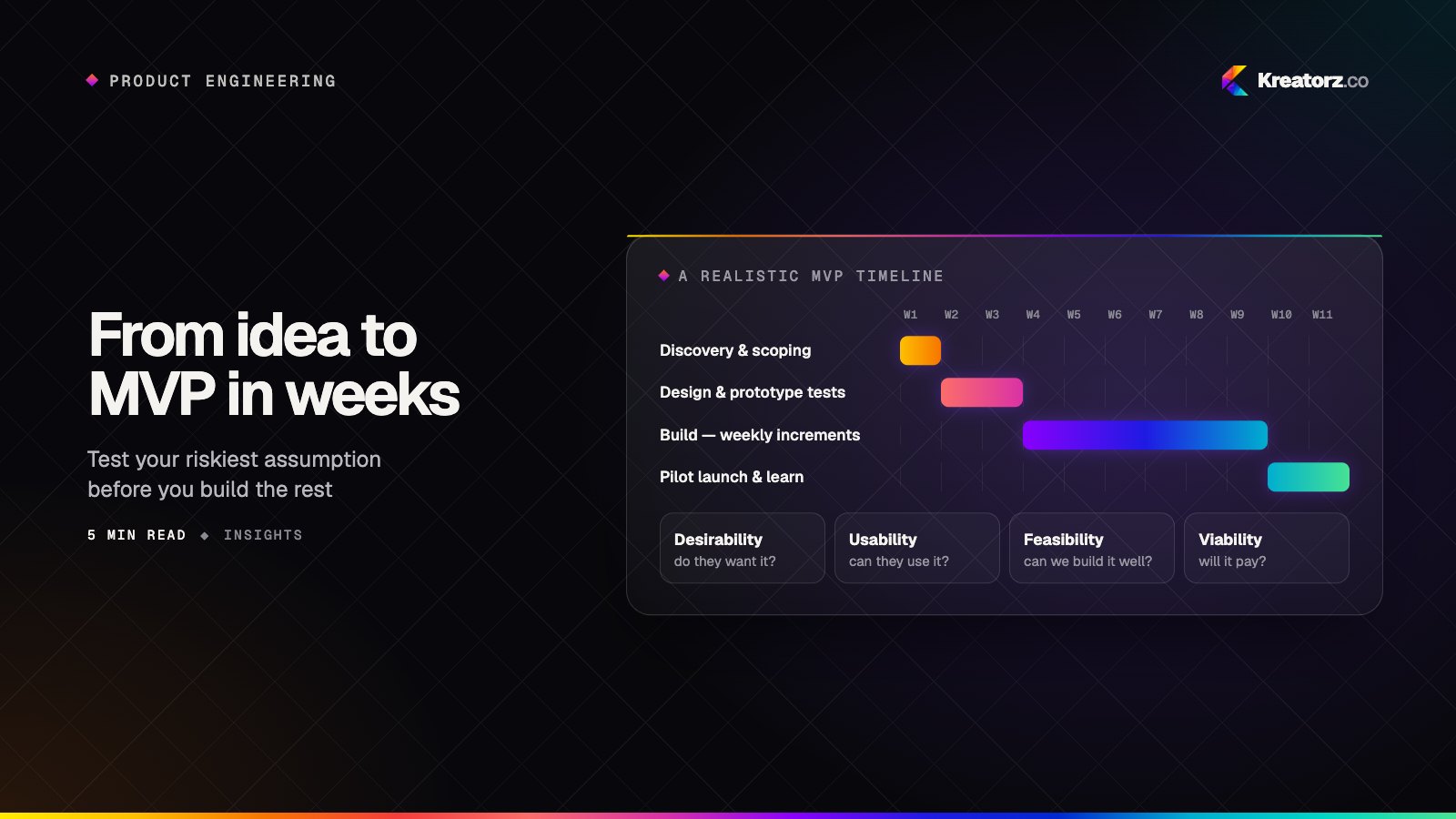
- Build in weekly increments — working software demoed every week, with a shared backlog so you can reprioritise as you learn.
- Launch to real users — app stores, a web release or a closed beta, depending on your audience.
- Measure and decide — review the data and user feedback together, then decide whether to persevere, adjust or pivot.
Our article on going from idea to MVP in weeks walks through this approach in more detail.
What to cut from your MVP
Cutting is the hardest part of startup app development, so here are the features we most often recommend postponing:
- Complex settings and customisation — choose sensible defaults and learn what people actually want to change.
- Multiple user roles — start with the one role that proves the value; add others when there is demand.
- Every platform at once — a single web app or one cross-platform mobile app is often enough to learn.
- Automated back-office processes — handle edge cases manually at first and automate what proves repetitive.
- Elaborate gamification and social features — unless they are the core proposition.
- Building what you can buy — use proven services for payments, email, authentication and support chat.
What we do not cut: security, data protection, accessibility basics, and the quality of the core experience. An MVP can be small, but it must not be broken.
MVPs in practice
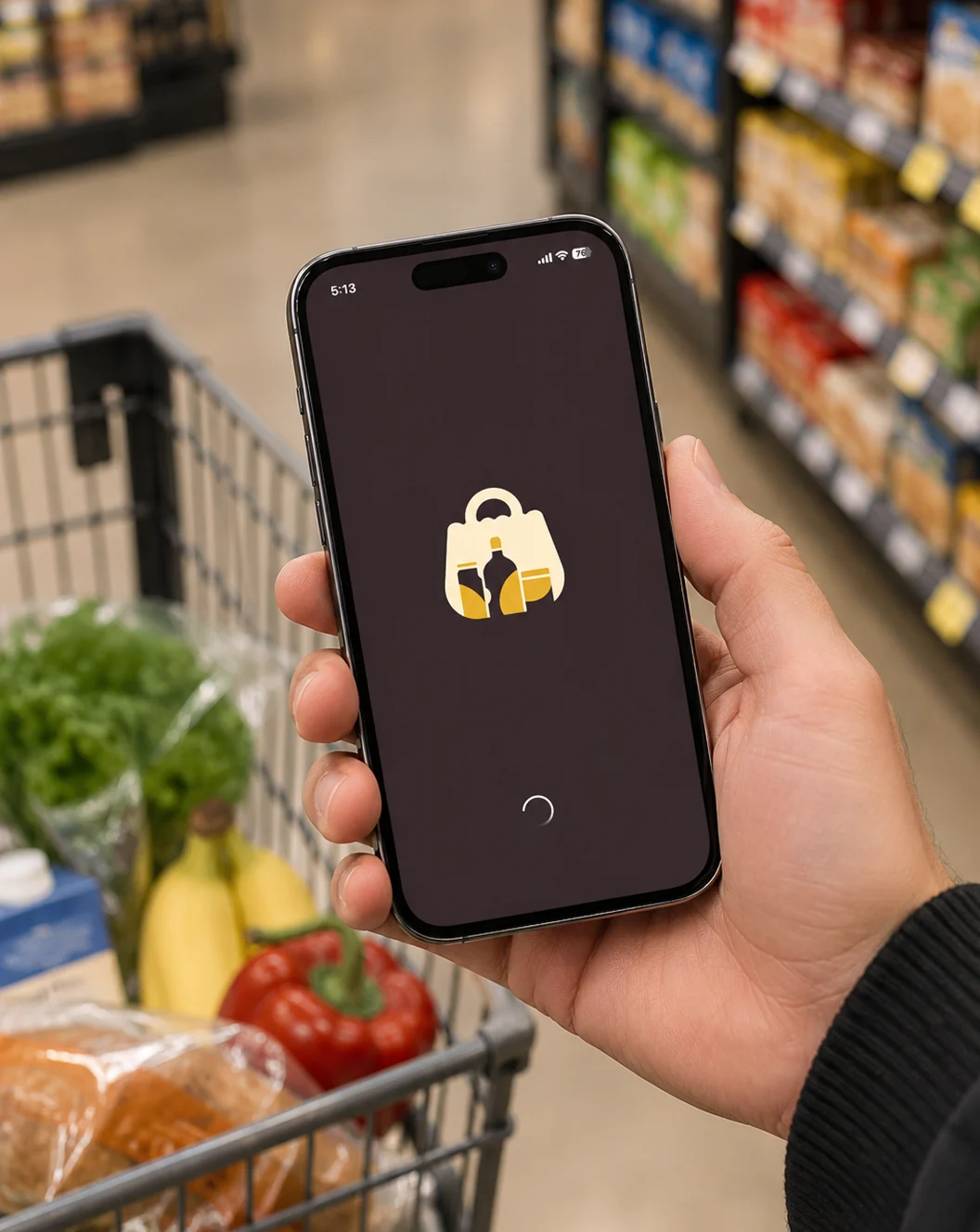
GrocEase, a grocery planning and pantry app, shows how a focused product can deliver clear value: monthly grocery lists, smart categorisation, a shopping checklist, pantry tracking and expiry reminders, all organised around one everyday problem — reducing food waste. Revelita, a couples productivity and relationship growth app, combines shared task management, a shared calendar, values-based assessment and personalised growth tracking — a reminder that the right core features matter more than the number of features.
Scaling after the MVP
When the results are positive, the next challenge is growing without a rewrite. We plan for this from the start:
- Sound architecture with clear boundaries between interface, business logic and data, so features can be added without tangling the code.
- Managed cloud services on Firebase or AWS that grow with usage.
- Automated tests and CI/CD introduced early, so speed does not drop as the codebase grows.
- A clear technical roadmap — which shortcuts were taken deliberately, and when to address them.
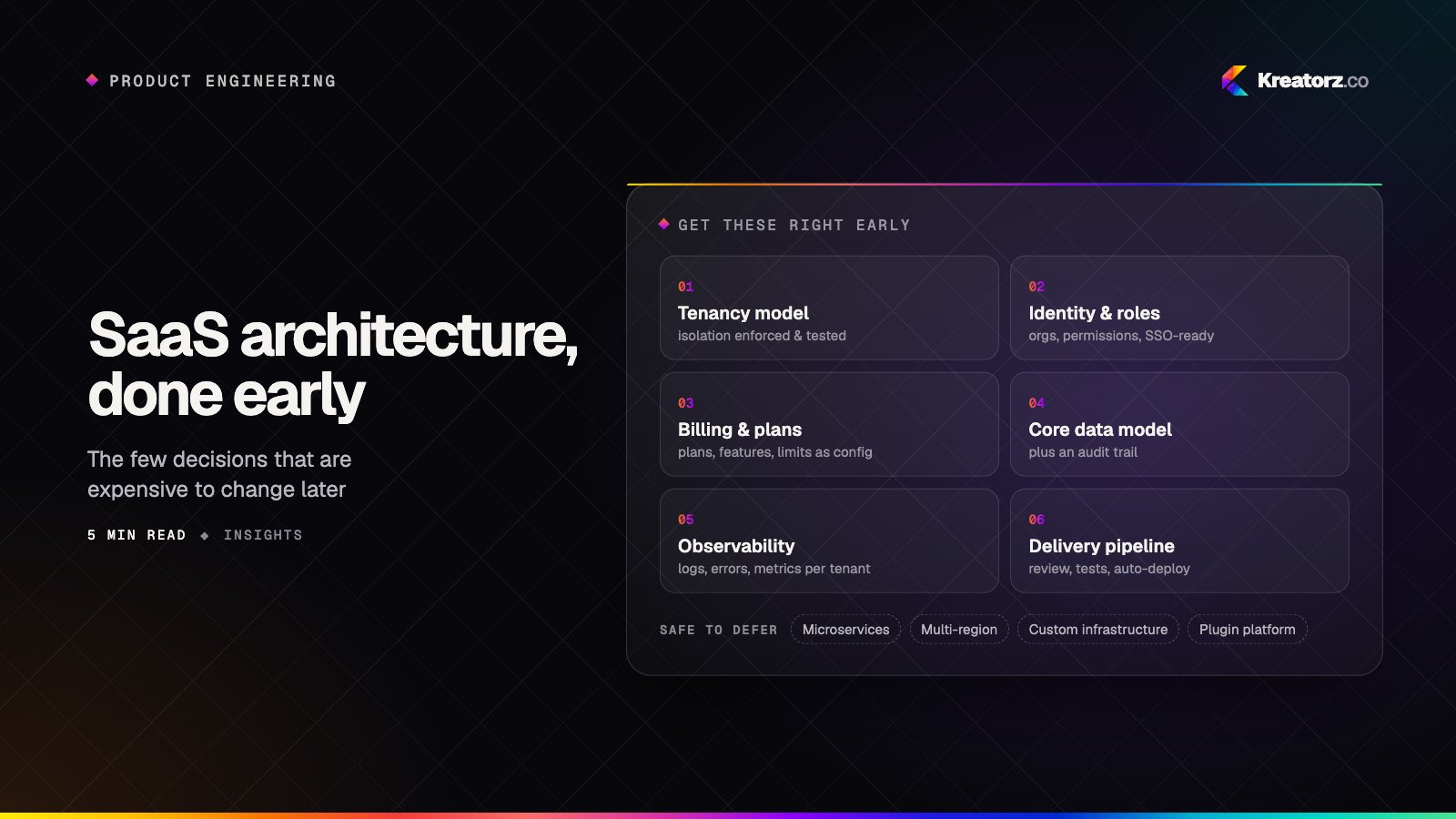
Our article on SaaS architecture decisions covers the choices that matter most as a product scales.
Why Kreatorz for MVP development
- Product partners, not order-takers. We question scope, challenge assumptions and focus on what you need to learn.
- End-to-end team. Strategy, design, mobile, web, backend and QA together, so nothing falls between the gaps.
- AI-native expertise. Recognised with the Global AI Impact Award (Global Image Awards Middle East, Riyadh 2026).
- Weekly demos and a shared backlog. You see progress and can change direction as you learn.
- You own it all. Code, designs and accounts are yours from day one — important when you raise investment or hire your own team.
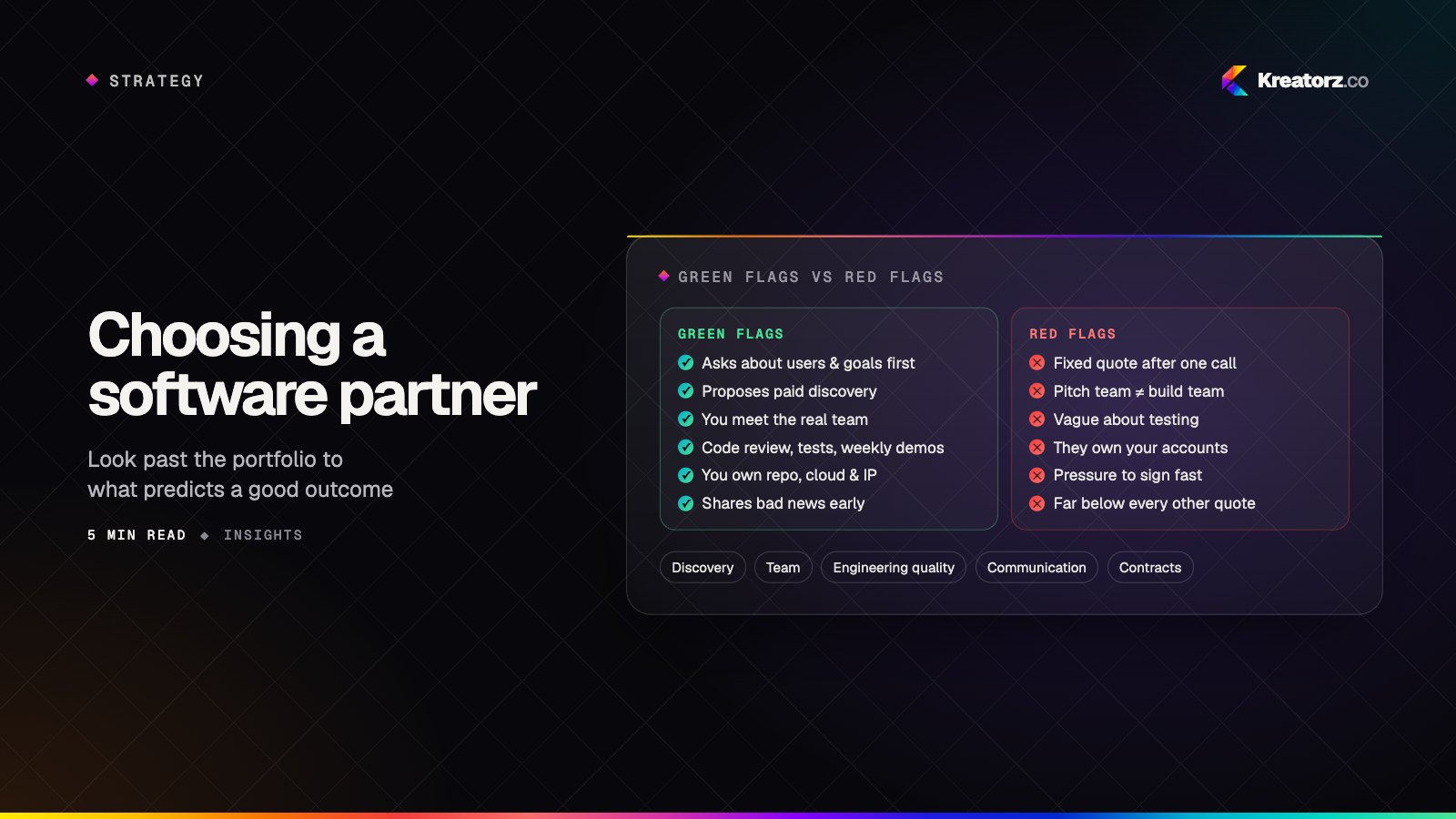
- Founders worldwide. We work across time zones from the United States, Canada and Pakistan. Comparing options? Read our guide to choosing a software development partner.