How to choose a software development partner: a buyer's guide
The partner you choose shapes your product more than any framework or tool. Here is how to evaluate agencies and studios on the things that actually predict a good outcome — and the red flags worth walking away from.
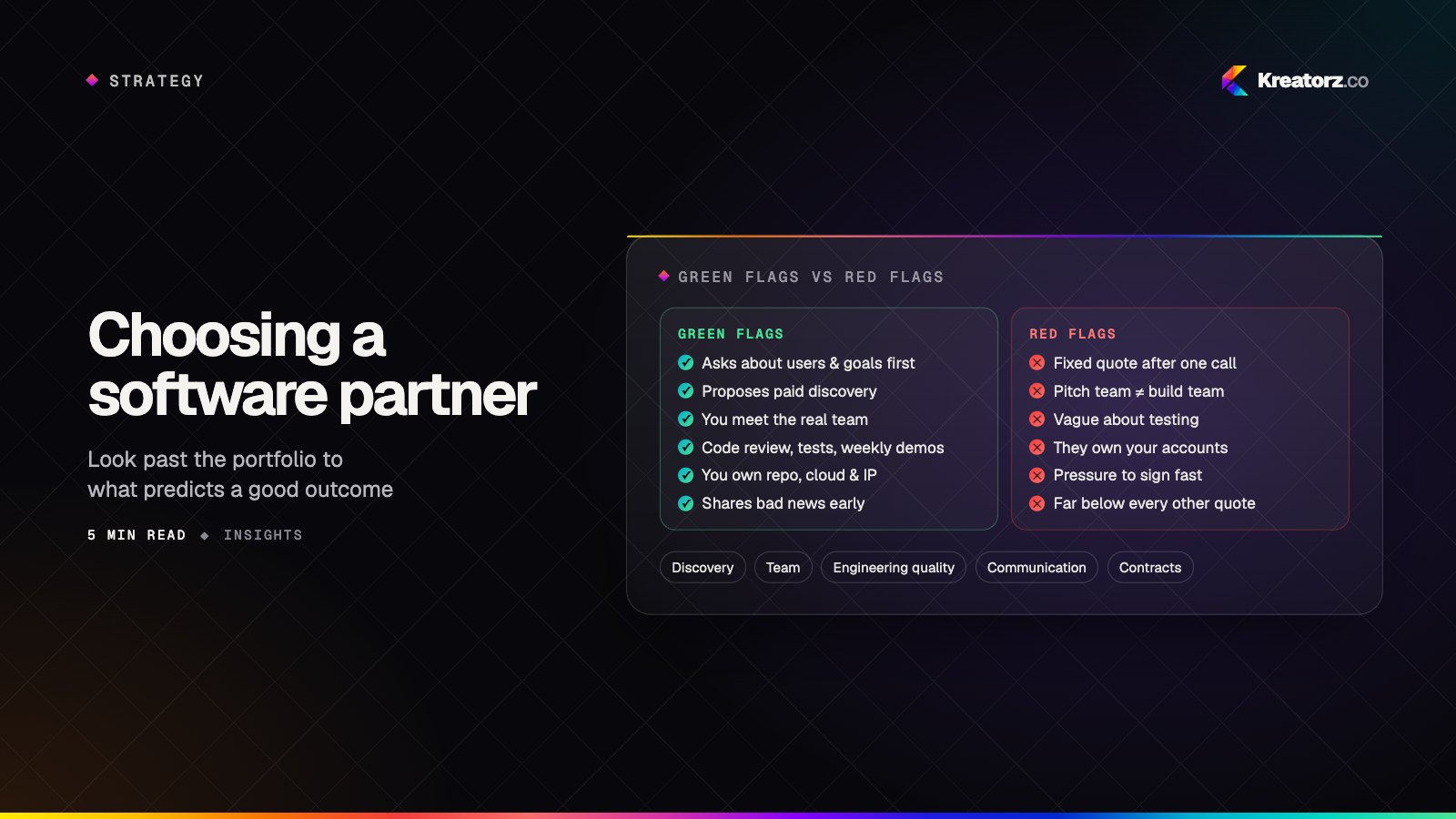
Choosing who builds your product is one of the highest-leverage decisions you will make. A strong partner turns a rough idea into a product people use, challenges assumptions you didn't know you had, and leaves you with software you can keep improving. A weak one can cost a year, a budget and a market window.
Portfolios and price lists make agencies look similar. The differences that matter show up elsewhere: in how they ask questions, how they plan, how they communicate when things go wrong, and what they hand over at the end. This guide is about seeing those differences before you sign.
Start with clarity on your side
Partners can only be as good as the brief they are given. Before you contact anyone, write down:
- The problem, in business terms: who has it, what it costs them today, and how you will know it is solved.
- Your constraints: budget range, deadline drivers, compliance requirements, systems you must integrate with.
- What you want from a partner: a team to build to a clear specification, or a team to help shape the product as well as build it.
- Who decides: the person who can make product calls quickly. Slow decisions are a bigger risk to most projects than slow developers.
A one-page brief like this lets you compare partners on the same footing — and the good ones will improve it.
What to evaluate
1. How they approach discovery
The best predictor of a good project is a good first conversation. Notice whether a potential partner:
- asks about your users, business model and goals before talking about technology;
- challenges scope — suggesting what to leave out, not only what to add;
- talks about risks and assumptions openly;
- proposes a short paid discovery phase for anything non-trivial, rather than a fixed price for a product nobody has defined yet.
A partner who quotes a precise fixed price for a complex product after a single call is either padding heavily or planning to argue about scope later.
2. The team you will actually get
Ask who will work on your project, not who appears in the pitch.
- Will you have a dedicated product or project lead, and how much of their time?
- Which roles are included — design, front-end, back-end, mobile, QA, DevOps — and are they in-house?
- How stable is the team? Who replaces someone if they leave?
- Will you talk to the engineers directly, or only through an account manager?
3. Engineering quality
You don't need to be technical to probe this. Ask how they handle:
- Code review — does every change get reviewed by another engineer?
- Automated testing — what is tested automatically, and when do tests run?
- Releases — can they show you a working build every week or two?
- Security — how are secrets, access and dependencies managed?
- Documentation and handover — what will exist if you move the product in-house later?
Ask to see a sample of their documentation, a release note or a test report. Teams with good habits are happy to show them.
4. Communication and transparency
Most failed projects fail on communication, not code. Look for:
- a regular rhythm — weekly demos, written updates and a shared backlog you can see;
- a clear process for changes in scope, with the impact on time and cost made explicit;
- honesty about bad news early, rather than surprises late;
- overlapping working hours that suit how you work.
5. Relevant experience — used wisely
Experience in your industry or with similar products shortens the learning curve. But be careful not to over-weight it: a team that has solved hard problems in a neighbouring domain may serve you better than one that has built many simple versions of exactly your product. Ask them to walk through a past project: the problem, the decisions, what went wrong and what they would do differently.
Pricing models, explained
| Model | Works well when | Watch out for |
|---|---|---|
| Fixed price | Scope is small, clear and stable | Change requests, padding, quality cuts under pressure |
| Time & materials | Scope will evolve as you learn | Needs active oversight and a clear budget cap |
| Dedicated team | Long-term product with a steady roadmap | Make sure you can scale up or down |
| Phased (discovery, then build) | New products with real uncertainty | Agree what the discovery phase must deliver |
For most new products — whether an MVP or a SaaS platform — a phased approach works best: a fixed-scope discovery phase that produces a validated plan, followed by iterative build on time and materials with a budget cap and regular reviews.
Contracts: the clauses that matter
- Intellectual property: you should own the code, designs and content created for you, transferred on payment.
- Access: your accounts — code repository, cloud, app stores, domains — should be owned by you from day one, with the partner given access.
- Exit and handover: what you receive if you part ways, and how much notice is needed.
- Confidentiality and data protection: especially if they will handle customer data.
- Warranty and support: how defects found after launch are handled, and what ongoing support costs.
Red flags worth walking away from
- A detailed fixed quote without any discovery or questions.
- Reluctance to let you meet the people who will build your product.
- No automated tests, code review or regular demos — or vague answers about them.
- The partner, not you, owning your code repository, cloud or app store accounts.
- Pressure to sign quickly, or prices that are far below every other proposal.
- References who are happy but can't describe how problems were handled.
Questions to ask in your first meetings
- What would you need to know before you could estimate this properly?
- What do you think is the riskiest part of this project?
- Who exactly would be on the team, and can we meet them?
- How will we see progress, and how often?
- How do you handle changes in scope?
- What will we own at the end, and what will you hand over?
- Can we speak to a client whose project hit a problem?
The bottom line
Choose a partner the way you would hire a senior team member: for judgement, honesty and habits, not just for a portfolio or a price. Start with a clear brief, test their thinking in a paid discovery phase, make sure you own everything that is built, and insist on seeing working software early and often.
We'd be glad to be one of the partners you speak to — and to answer every question on this list. Tell us about your project.
Related services
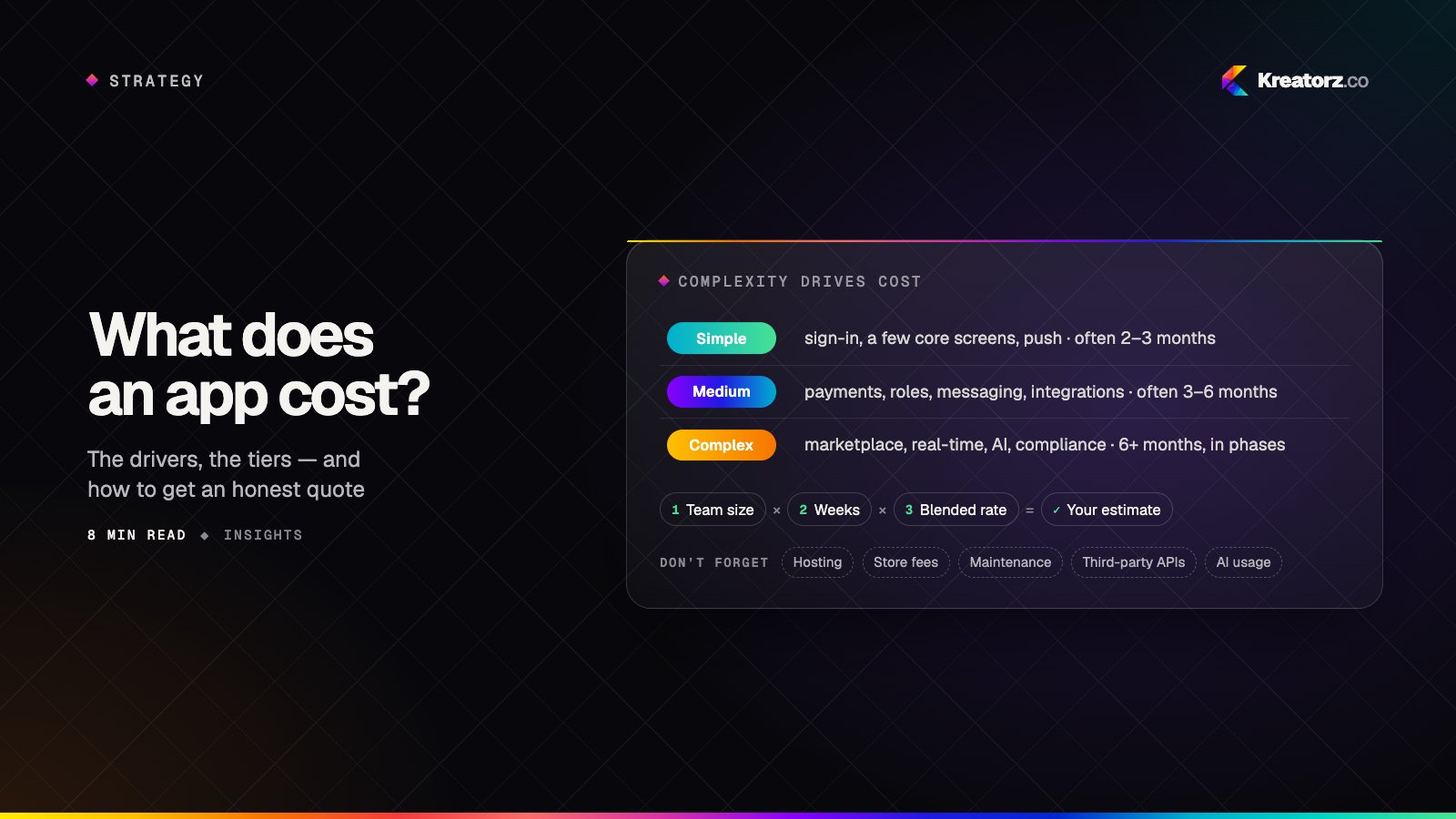
How much does it cost to build an app? A practical guide for 2026
There is no single price for an app, but there is a reliable way to reason about it. Here is what actually drives app development cost, how complexity tiers compare, how to estimate a budget yourself and how to reduce cost without cutting quality.
15 November 2026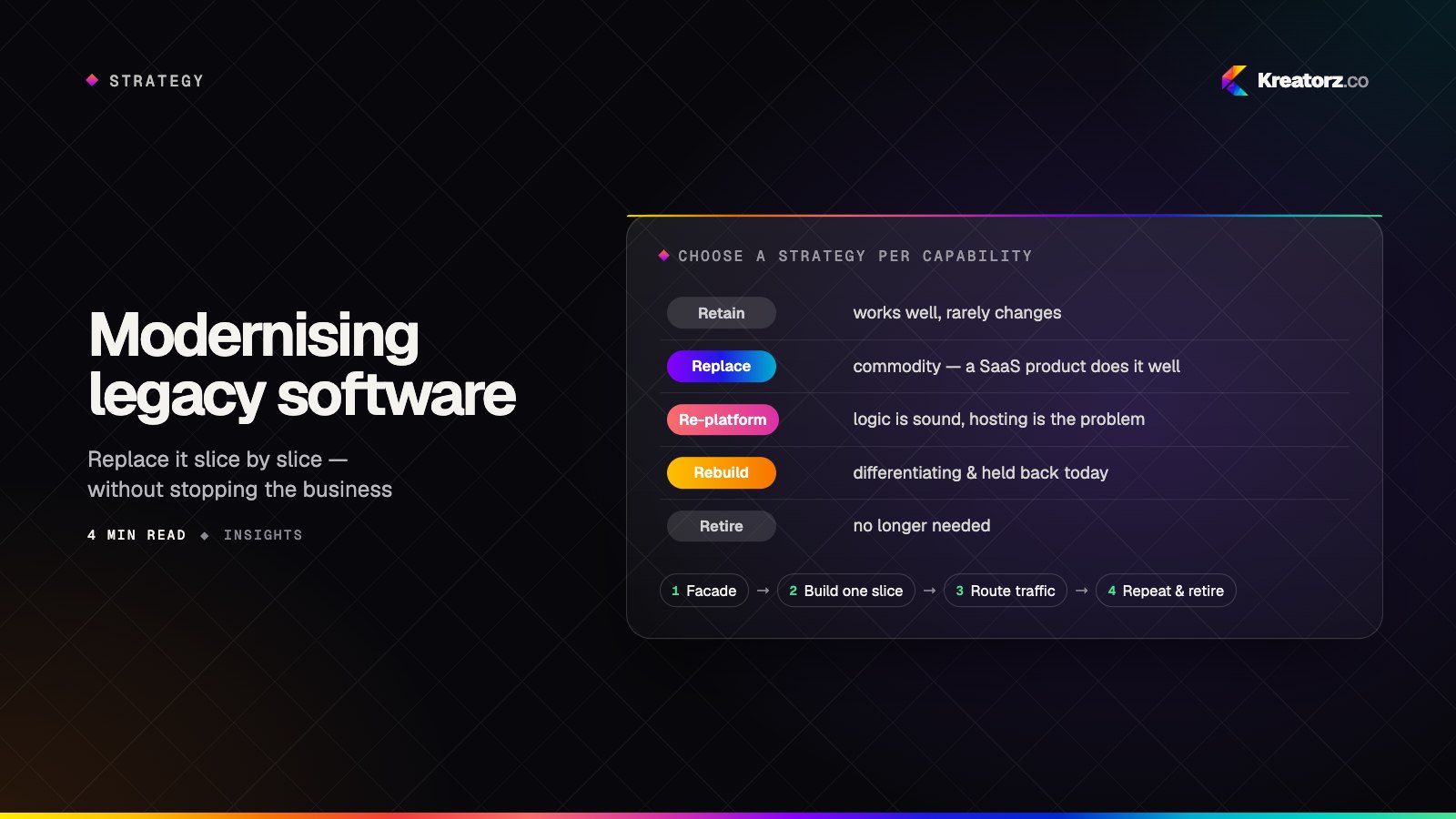
Modernising legacy business software without stopping the business
Big-bang rewrites are one of the riskiest projects a company can take on. Incremental modernisation lets you replace an ageing system piece by piece — while the business keeps running and value arrives early.
19 August 2026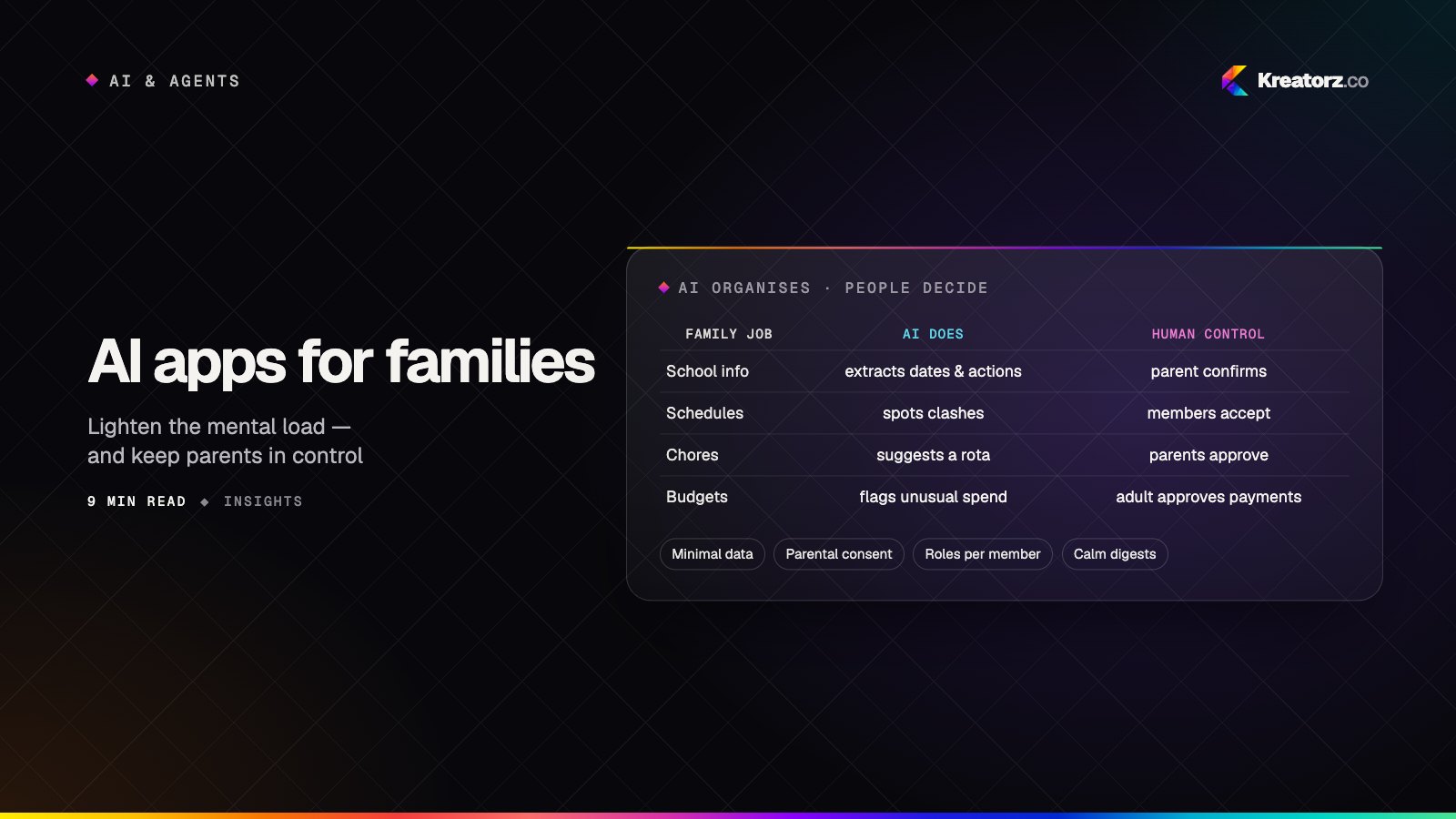
AI apps for families: how to build a family app parents actually trust
Families are drowning in schedules, school emails and small decisions. AI can genuinely lighten that load — if it is designed around real household jobs, several family roles, children's privacy and clear human control. A guide for product teams.
15 November 2026