How much does it cost to build a healthcare app? A practical guide
Healthcare apps cost more than ordinary apps of the same size because privacy, security, integrations and clinical workflows add real engineering work. Here is what drives healthcare and telemedicine app development cost, from HIPAA safeguards and EHR integrations to video, e-prescribing, testing and ongoing costs, and how to start with an MVP.
Short answer
Healthcare app cost is team size × time, driven by the type of app, its features, HIPAA or local privacy safeguards, EHR and FHIR integrations, video, e-prescribing, payments or insurance, and security testing. Focused patient apps often take around 3–6 months, while telemedicine platforms with several integrations often take 6 months or more. Budget separately for compliant hosting, vendor fees, security reviews and ongoing maintenance.
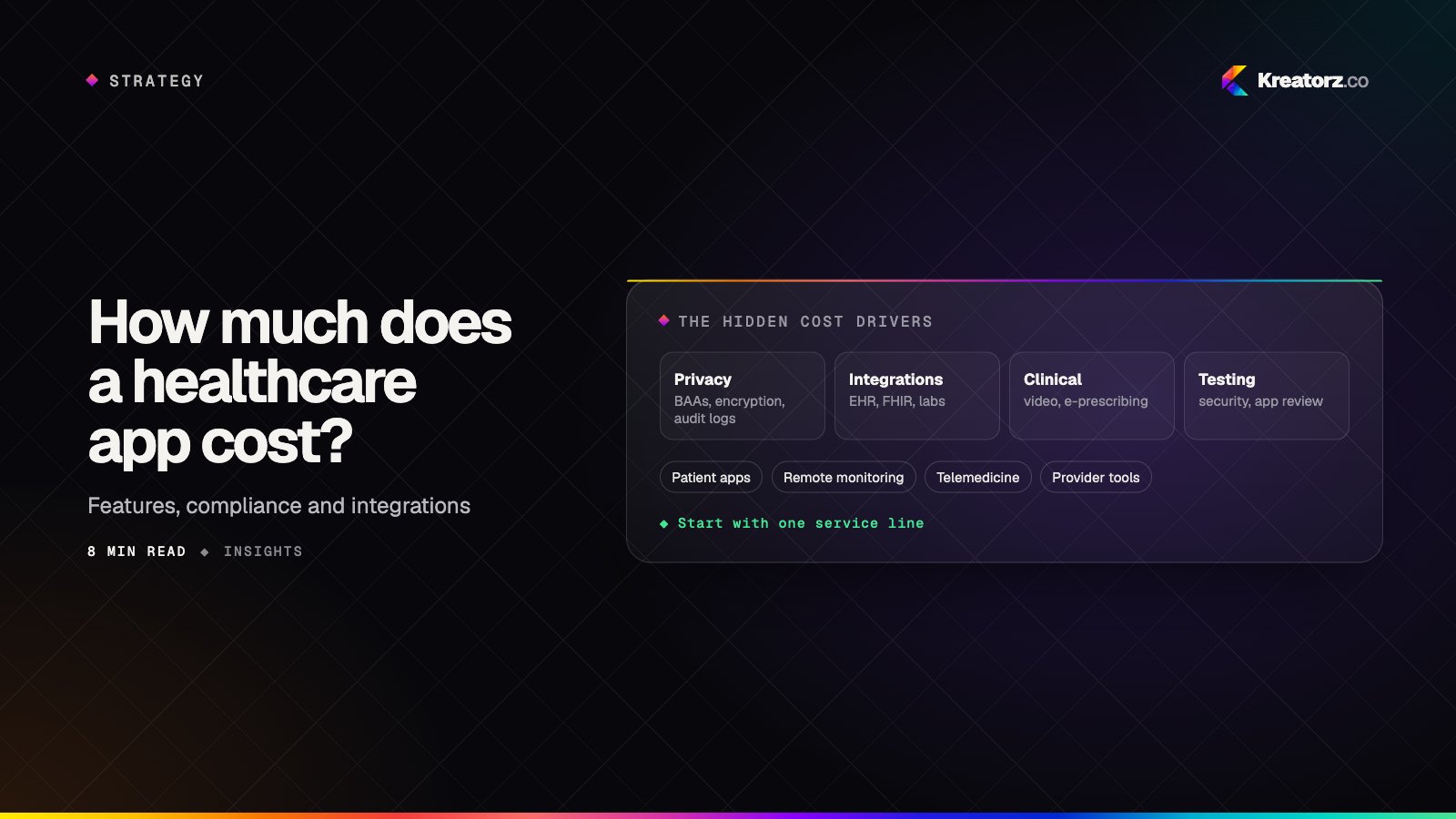
Healthcare founders and clinic owners often ask for a price for "an app like" a well-known telehealth product. The honest answer is that healthcare apps vary as widely as any other kind of software, but they share one thing: the work behind the screens is heavier. Protecting health information, connecting to clinical systems and fitting into clinicians' workflows all take engineering time.
This guide explains what drives the cost of building a healthcare app, which features and compliance tasks add the most work, how integrations and regulations change the picture, and how to start with a focused MVP. It does not quote prices, because a fair number depends on your scope, but it will help you understand and control the budget.
Where the extra work comes from
A healthcare app is priced the same way as any other software, by the people and time it takes. What changes is how many specialists you need and for how long. Our general guide on how much it costs to build an app covers the common drivers such as scope, platforms and design. Healthcare adds several more:
- Privacy and security safeguards for protected health information
- Integrations with EHRs, labs, pharmacies and insurers
- Clinical workflows that must be designed with clinicians
- More testing, documentation and review before launch
- Ongoing compliance, monitoring and vendor costs
Types of healthcare apps and their relative cost
| App type | Examples | Typical complexity | Relative cost |
|---|---|---|---|
| Wellness and lifestyle | Habit tracking, meditation, nutrition logging without clinical data | Lower, if no protected health information is involved | Lower |
| Patient engagement | Appointment booking, reminders, patient portal, secure messaging | Moderate, with privacy safeguards and some integrations | Moderate |
| Remote monitoring | Device and wearable data, care plans, clinician dashboards | Moderate to high, with device integrations and alerts | Moderate to higher |
| Telemedicine | Video visits, intake, notes, e-prescribing, payments | High, with video, clinical workflow and several integrations | Higher |
| Clinical and provider tools | Clinician workflow apps, care coordination, decision support | High, often with deep EHR integration | Higher |
The same app type can move up a tier quickly. A booking app that only stores names and times is simpler than one that collects symptoms, insurance details and medical history.
Rose Optometry, a platform we built for an eye care practice, sits in the patient engagement tier. It brings eyewear browsing, online eye exam booking and automated follow-up reminders into one system. The design problem was that a catalog, a phone line for appointments and patient memory for follow-ups had always lived in separate places, so most of the work went into one patient journey and one appointments view for the practice, rather than into clinical integrations.
Features that drive cost
Most healthcare apps combine a set of familiar building blocks. Each one adds design, development and testing time:
- Accounts and identity: patient and clinician sign-up, verification, roles and permissions
- Scheduling: provider availability, time zones, reminders, rescheduling and cancellations
- Intake: structured forms, consent, medical history and document or photo uploads
- Secure messaging: between patients and care teams, with attachments and notifications
- Video visits: reliable calls on weak connections, waiting rooms and in-call notes
- Clinical notes and records: visit summaries, care plans and patient-facing records
- Payments and insurance: self-pay, subscriptions, eligibility checks and claims
- Admin and reporting: an operations dashboard, audit views and analytics
Each additional user type also adds cost. A patient app plus a clinician app plus an admin panel is effectively three products sharing one backend.
HIPAA and privacy compliance work
If your app creates, receives, stores or sends protected health information on behalf of a covered entity in the US, HIPAA is likely to apply. Many consumer health apps fall outside HIPAA, but that does not make them unregulated:
- The FTC's Health Breach Notification Rule, as amended in 2024, covers most health apps and similar technologies that HIPAA does not. It treats an unauthorized disclosure, such as sharing health data with an advertising platform without permission, as a breach that requires notifying users and the FTC.
- State laws add more. Washington's My Health My Data Act covers consumer health data outside HIPAA. It is built to stop that data being collected or shared without consent, requires signed authorization before it is sold, and can be enforced by consumers in court as well as by the Attorney General.
Other countries have their own health privacy rules. Our guide on how to build a HIPAA-compliant app explains the safeguards in detail; here is how they affect cost.
- Business associate agreements (BAAs): every vendor that handles protected health information, such as your cloud host, video provider, email or SMS service and analytics tools, needs to sign one. This often limits you to specific services or paid tiers.
- Compliant hosting: using cloud services that are covered by a BAA and configured correctly, with separate environments and restricted access.
- Encryption: in transit and at rest, including backups and files, with sound key management.
- Access controls and audit logs: role-based access, strong authentication and a record of who viewed or changed health information.
- Policies and training: risk assessments, incident response plans and documentation that your organization maintains.
This work adds time to design, development and testing, and it shapes vendor choices from the start. It costs much less to plan for than to retrofit. HIPAA requirements depend on your exact situation, so confirm your obligations with qualified legal counsel. The same applies to analytics and advertising tools: under the FTC rule and state laws, a tracking pixel on a symptom screen can be a reportable disclosure, so decide early which tools are allowed near health data.
EHR and FHIR integrations
Connecting to electronic health record systems is one of the largest and least predictable cost drivers. Many modern EHRs offer APIs based on the HL7 FHIR standard, which helps, but every integration still involves:
- Registering with the EHR vendor's developer program and meeting its review requirements
- Mapping data between your app and the EHR, such as patients, appointments, notes and results
- Handling authentication, permissions and consent
- Testing in vendor sandboxes and with real clinic configurations, which often differ
- Monitoring and fixing the integration as vendors change their systems
One well-scoped EHR integration is a manageable project. Supporting several EHRs, or older systems without modern APIs, adds considerably more time. Integration platforms can reduce effort in some cases, at the cost of ongoing fees.
Video, e-prescribing and labs
Video. Building video from scratch is rarely worth it. Most teams use a video provider that signs a BAA, which reduces build time but adds usage fees. The work still includes waiting rooms, connection quality handling, permissions and support for patients on older phones. Our guide on how to build a telemedicine app covers the full visit flow.
E-prescribing. Sending prescriptions electronically usually means integrating a certified e-prescribing service. Prescribing controlled substances has additional identity and security requirements. Expect certification steps and testing time on top of development.
Labs and pharmacies. Ordering tests and receiving results, or checking pharmacy information, means more integrations, each with its own onboarding and testing.
Payments and insurance
Self-pay with cards or subscriptions is the simpler path. Billing insurance adds eligibility checks, coding, claims and handling rejections, often through a clearinghouse or billing partner. Many startups begin with self-pay or employer-paid models and add insurance once the service is proven.
Security testing and app store review
Healthcare apps deserve more testing than most:
- Security testing: code review, vulnerability scanning and, before launch, an independent penetration test
- Accessibility testing, because patients include older adults and people with disabilities
- Device testing on a range of phones and network conditions
- Clinical workflow testing with real clinicians before launch
App store review also takes more care for medical apps. Apple and Google may ask for evidence of the organization behind the app, clear privacy disclosures and accurate health claims. Plan extra time for review and possible follow-up questions.
Regulated medical device considerations
Some software is regulated as a medical device. In the US, the FDA oversees certain software as a medical device, for example software that diagnoses conditions or recommends treatment. Wellness apps and many administrative tools are not regulated this way, but the line depends on what the software claims and does.
The FDA explains where it draws that line in two guidance documents, both revised in January 2026 and listed on its digital health guidance page: General Wellness: Policy for Low Risk Devices, for apps that support a healthy lifestyle, and Clinical Decision Support Software, for software that helps clinicians make decisions. If your app interprets health data, makes clinical recommendations or uses AI to support diagnosis, read both and get advice from regulatory experts early. Regulatory requirements can add quality processes, documentation and review time, so they belong in your plan from the beginning.
Timelines and team shape
Timelines are indicative and depend on scope, integrations and how quickly decisions are made.
| Scope | Typical team | Indicative timeline |
|---|---|---|
| Focused patient app or MVP with privacy safeguards | Designer, two or three developers, QA, product lead | Often around 3–6 months |
| Telemedicine or remote monitoring platform with one or two integrations | Designer, mobile and backend developers, QA, DevOps, product lead | Often around 6–9 months |
| Multi-sided platform with several EHR, billing and pharmacy integrations | Larger cross-functional team with integration and security specialists | Often 9 months or more, delivered in phases |
Start with a focused MVP
The most reliable way to control healthcare app cost is to narrow the first release:
- Pick one service line and one patient group, such as follow-up visits for one specialty.
- Choose one care model, scheduled or on demand, not both at first.
- Start with self-pay or a single payer model before full insurance billing.
- Integrate one EHR, or start with a manual workflow while you prove demand.
- Build the privacy and security foundation properly from day one, because it is expensive to add later.
An MVP built this way can launch sooner, gather real feedback from patients and clinicians, and grow into the full product.
Ongoing costs to plan for
After launch, budget for:
- Compliant hosting, backups and monitoring
- Video, messaging, e-prescribing and integration vendor fees
- Regular security reviews, penetration tests and dependency updates
- Operating system and app store updates
- Support for clinicians and patients
- Ongoing compliance work, such as risk assessments and policy reviews
- Reviews of which analytics, advertising and support tools can see health data, each time you add one
To scope a first release around one service line and one integration, talk to our healthcare app development team.
Frequently asked questions
How much does HIPAA compliance add to app development cost?
It depends on how much health information the app handles and how it is built. Compliance work includes compliant hosting, encryption, access controls, audit logs, BAAs with vendors, risk assessments and security testing. It is much cheaper to plan from the start than to add later. Confirm your specific obligations with qualified legal counsel.
My app is not covered by HIPAA. Do I still have compliance work?
Probably. The FTC's Health Breach Notification Rule covers many health apps outside HIPAA, and state laws such as Washington's My Health My Data Act regulate consumer health data directly. Budget for consent flows, careful vendor choices and breach response even if you never sign a BAA.
Does my health app need FDA approval?
Only some health software is regulated as a medical device, usually software that diagnoses, treats or makes clinical recommendations. Many wellness and administrative apps are not. The FDA's general wellness and clinical decision support guidance documents describe where the line falls, but the answer depends on your app's features and marketing claims, so get advice from regulatory experts early in planning.
How can I reduce the cost of building a healthcare app?
Start with one service line, one care model and one user group. Use proven vendors for video and e-prescribing instead of building them, begin with self-pay before insurance billing, limit the first release to one EHR integration and invest in the privacy foundation once so you do not have to rebuild it.
- Healthcare & HIPAA appsWe design and build patient apps, telemedicine platforms, provider tools and AI features with HIPAA safeguards built into the architecture from day one.Explore
- Mobile app developmentWe plan, design, build and grow mobile apps for iPhone and Android — choosing the right technology for your product, not the one we happen to prefer.Explore
- Custom software developmentWe design and build web platforms, internal tools, customer portals, mobile apps and AI-powered systems that fit your business — instead of bending your business to…Explore


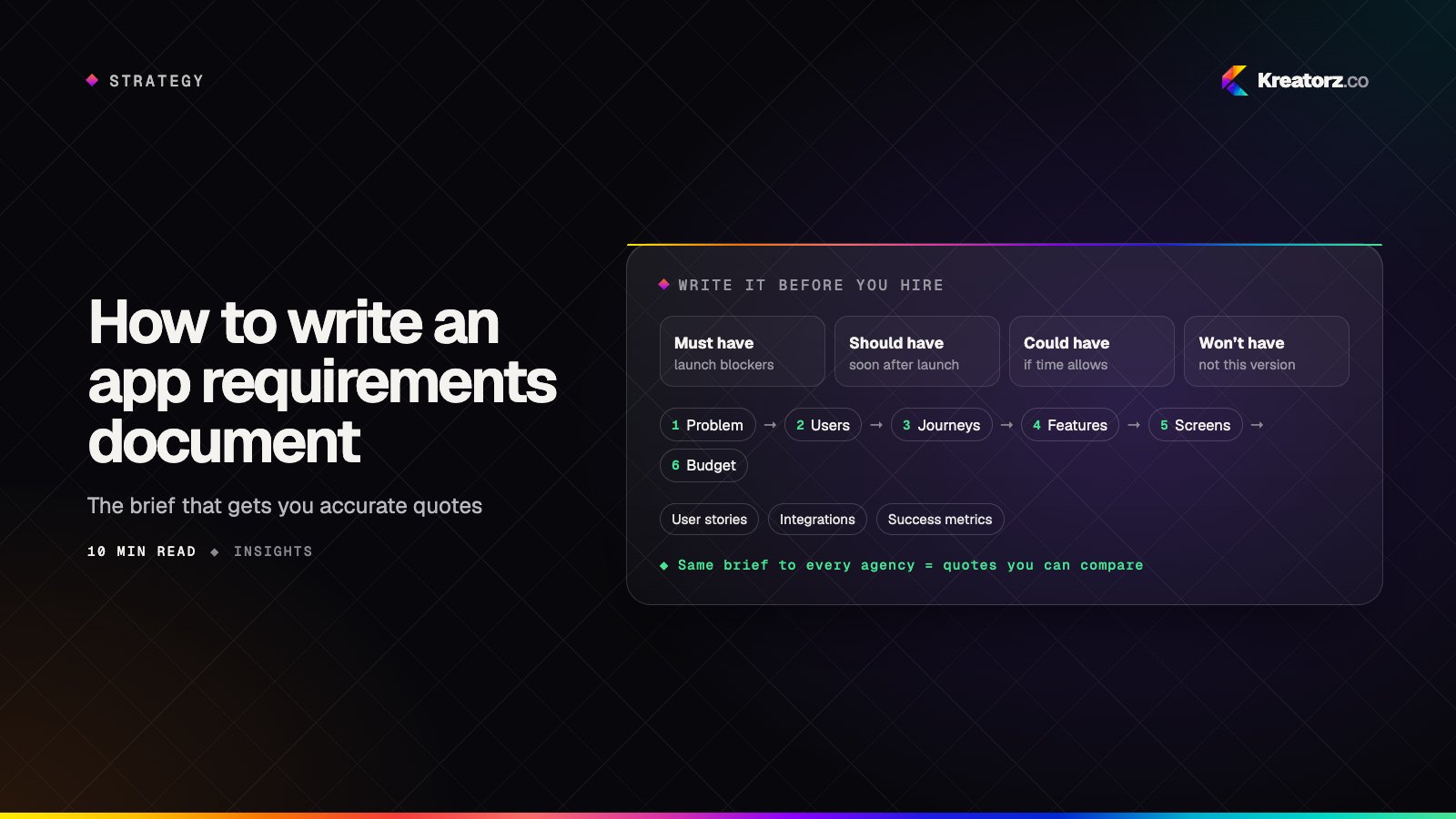
How to write an app requirements document before you hire developers
A clear app requirements document is the fastest way to get accurate, comparable quotes from developers. Here is a step-by-step guide to writing one, from the problem statement and user stories to must-have features, integrations, compliance flags, budget and a fill-in template you can copy.
21 November 2026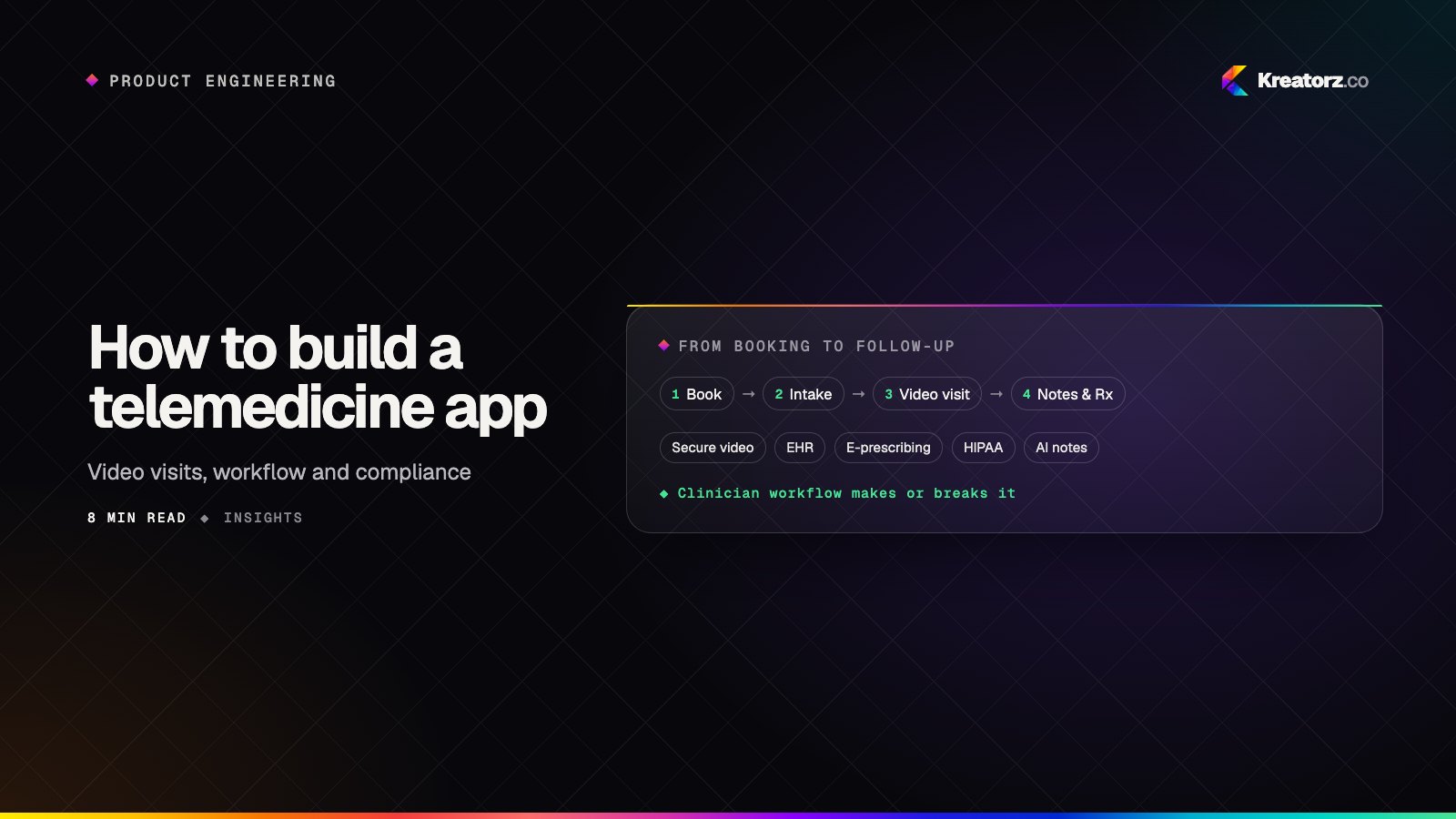
How to build a telemedicine app patients and clinicians actually use
A telemedicine app has to make a video visit feel as easy as a phone call for patients, fit into clinicians' existing workflow and protect health information to a standard regulators accept. Here is how to choose your care model, plan prescribing and licensing, get video right, integrate with EHR and e-prescribing, and launch with one service line.
25 November 2026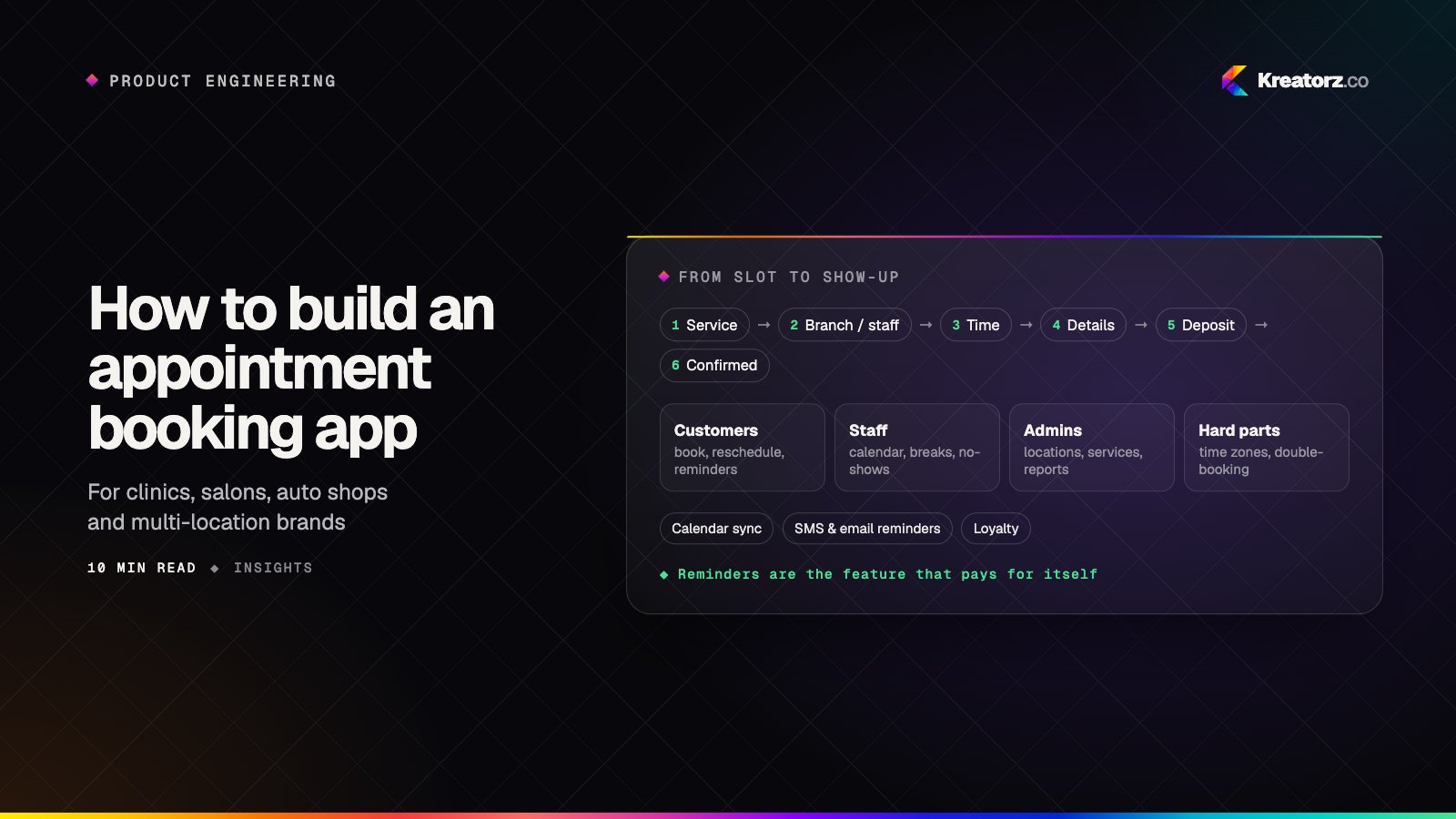
How to build an appointment booking app for your business
An appointment booking app looks simple until two customers grab the same slot, a reminder goes out in the wrong time zone or a no-show empties a chair. Here is a practical guide for clinics, salons, studios and multi-location service businesses deciding whether to buy or build, and how to build it well.
21 November 2026