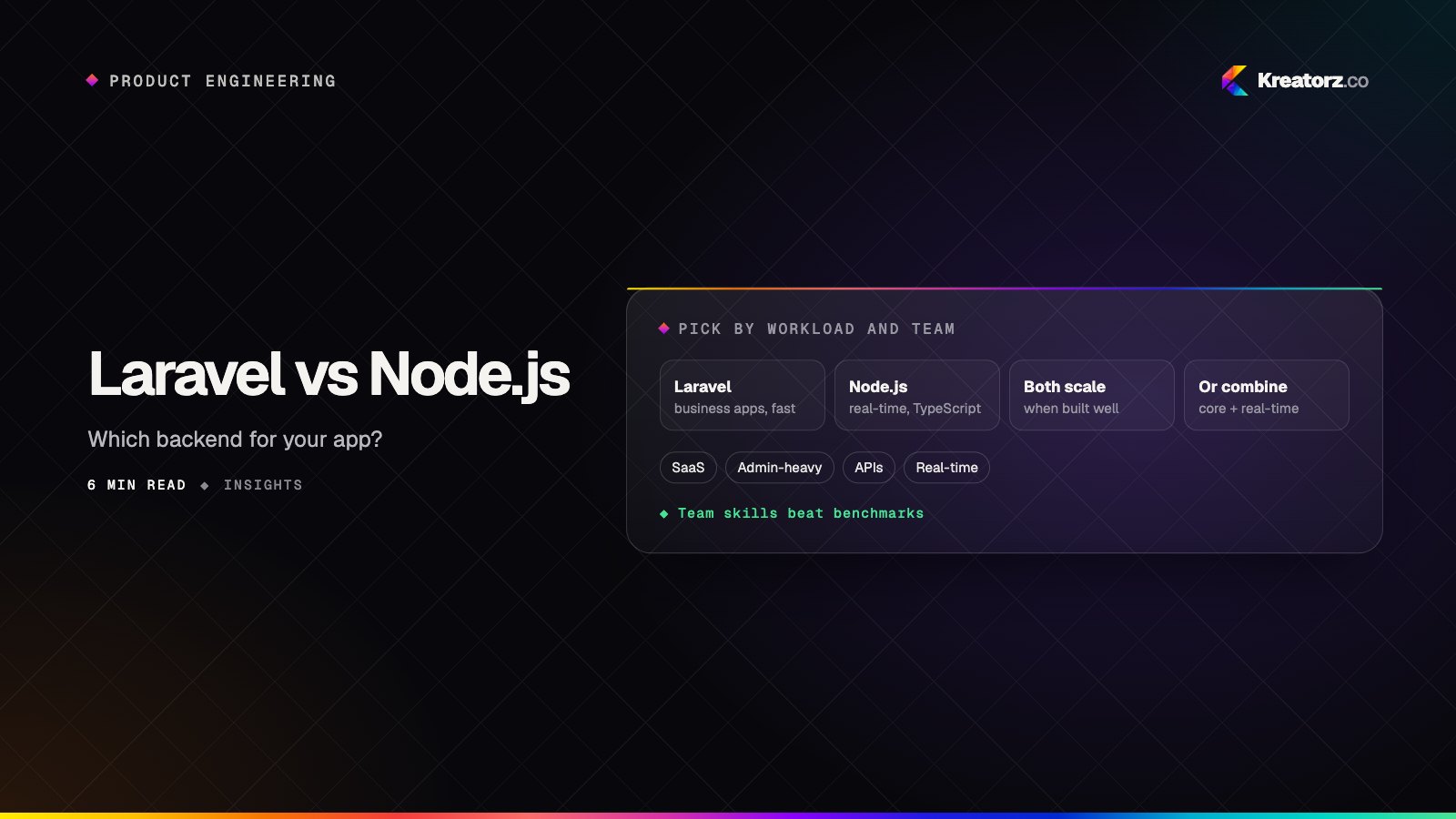
Laravel vs Node.js: which backend should you choose for your app?
Laravel and Node.js are two of the most popular ways to build a web or mobile app backend. Laravel is a batteries-included PHP framework built for fast, structured development. Node.js is a JavaScript runtime that excels at real-time, I/O-heavy systems and shares a language with your front end. Here is how they compare and how to choose.
Short answer
Choose Laravel when you want to build a business application, admin-heavy product or SaaS quickly with a complete, conventional framework, or when you have existing PHP systems. Choose Node.js when you need real-time features, many concurrent connections, a TypeScript stack shared with a React front end or event-driven integrations. Both scale well when built properly.
When planning a web app, SaaS product or mobile app backend, the choice of backend technology shapes how quickly you can build, how easily you can hire and how the system behaves as it grows. Laravel and Node.js come up in almost every comparison.
They aren't quite the same kind of thing. Laravel is a full framework for PHP. Node.js is a runtime that lets JavaScript and TypeScript run on the server, usually paired with a framework such as Express, Fastify or NestJS. Comparing them really means comparing two ways of building a backend. This guide explains the differences and how to choose.
At a glance
| Laravel | Node.js | |
|---|---|---|
| Language | PHP | JavaScript or TypeScript |
| Type | Full-stack framework with strong conventions | Runtime; you choose a framework and libraries |
| Built-in features | Routing, database ORM, migrations, authentication, queues, scheduling, mail, testing | Depends on framework; NestJS provides structure, Express is minimal |
| Strengths | Speed of building business apps, consistency, mature ecosystem | Real-time features, many concurrent connections, one language across front end and back end |
| Real-time | Supported through first-party and third-party WebSocket tools | Native strength |
| Typical uses | SaaS, admin-heavy apps, portals, ecommerce, internal tools, content-driven sites | APIs, chat and live updates, streaming, integrations, microservices, BFFs for React and mobile apps |
Laravel: productivity through conventions
Laravel gives a small team a lot out of the box: routing, the Eloquent ORM, database migrations, authentication, authorization, queues, task scheduling, notifications, mail, file storage, caching and testing tools. Its ecosystem adds first-party packages for admin panels, billing, API tokens, queue monitoring and real-time broadcasting, plus hosting and deployment tools.
Why teams choose it:
- Fast development of business features. Forms, CRUD screens, permissions, billing and admin tools come together quickly.
- Strong conventions. Most Laravel apps are structured similarly, which makes it easier for new developers to understand an existing codebase.
- Mature and stable. PHP and Laravel have been used for large production systems for many years, and modern PHP is far faster than its old reputation suggests.
- Affordable hosting and broad talent pool, including many experienced developers in Pakistan, Europe and elsewhere.
Where it is less natural: heavy real-time workloads with many long-lived connections, and teams that want one language across browser, mobile and server.
Node.js: real-time and one language
Node.js runs JavaScript on the server using a non-blocking, event-driven model. It handles many simultaneous connections efficiently, which makes it ideal for backends that spend most of their time waiting on databases, APIs and network traffic.
Why teams choose it:
- Real-time features. Chat, live dashboards, notifications, collaboration and tracking are natural fits.
- One language end to end. With TypeScript, the same types and validation rules can be shared between a React front end, a React Native mobile app and the server.
- Huge ecosystem. npm has a library for almost everything, and most third-party APIs ship JavaScript SDKs.
- Good for integrations and event-driven systems, such as webhooks, queues and serverless functions.
Where it needs care: Node.js gives you more choices and fewer conventions. Without a structured framework such as NestJS and clear team standards, codebases can become inconsistent. CPU-heavy work, such as large data processing, should be moved to background workers or other services so it doesn't block the server.
Performance and scalability
Both scale to large products when they are designed well. In most business applications, performance depends far more on database design, caching, query efficiency and architecture than on the language.
- Node.js is very efficient for many concurrent, I/O-bound connections, such as real-time apps and APIs that call other services.
- Laravel handles typical request-response workloads efficiently, and tools such as Laravel Octane keep the app in memory between requests for higher throughput.
Choose based on your workload and team, not on synthetic benchmarks. Our article on SaaS architecture decisions covers the choices that matter more for scale.
Development speed
For a typical business application with users, roles, admin screens, payments, emails and reports, Laravel often gets to a working product faster because so much is built in and conventional.
For real-time products, API-first systems or teams already working in TypeScript with React, Node.js can be faster because the whole team works in one language and shares code across layers.
Hiring and maintenance
Both have large talent pools. Consider:
- What your current team knows, since retraining slows delivery.
- Whether you will share developers between front end and back end, which favors Node.js with TypeScript.
- How long the system needs to live and how easily new developers can understand it, which favors strong conventions: Laravel by default, or NestJS on the Node.js side.
Hosting and cost
Both run on all major clouds, containers and managed platforms. Laravel has dedicated hosting and deployment tools, and runs on low-cost traditional hosting for smaller apps. Node.js fits naturally on serverless platforms and container services. For most products, hosting cost differences are minor compared with development and maintenance costs.
When to choose Laravel
- A SaaS product, portal, marketplace back office or internal tool with lots of business logic and admin screens
- Fast delivery of a feature-rich MVP with a small team
- Existing PHP or Laravel systems you want to extend or modernize
- Content-heavy or ecommerce sites where PHP's ecosystem is strong
When to choose Node.js
- Real-time apps: chat, live tracking, collaboration, dashboards and notifications
- API backends for React web apps and React Native mobile apps, sharing TypeScript types
- Integration layers, webhooks and event-driven workflows
- AI-powered products that orchestrate many API calls and stream responses
Can you use both?
Yes. Many systems combine them, for example a Laravel application for the core business logic and admin, with a Node.js service for real-time features or integrations. This adds operational complexity, so do it when there is a clear benefit, not by default. If you have an older PHP system, our guide on modernizing legacy software explains how to improve it step by step rather than rewriting from scratch.
The bottom line
Laravel is an excellent choice for building business applications quickly with a complete, conventional framework. Node.js shines for real-time, API-first and integration-heavy systems, especially with a TypeScript and React stack. Both scale when built well. Choose based on your product's workload, your team's skills and how long the system needs to live.
At Kreatorz we build backends in both Laravel and Node.js and help teams choose the right one for their product. See our Laravel development and Node.js development services, or tell us what you're building.
Frequently asked questions
Is Laravel better than Node.js?
Neither is better in general. Laravel is often faster for building business applications with lots of forms, admin screens and business rules, thanks to its built-in features and conventions. Node.js is often better for real-time apps, many concurrent connections and teams using TypeScript across front end and back end.
Is Node.js faster than Laravel?
Node.js handles many concurrent, I/O-heavy connections very efficiently, which suits real-time and API-heavy workloads. For typical business applications, database design, caching and architecture affect speed far more than the choice between Laravel and Node.js, and Laravel can be tuned for high throughput.
Which is better for a SaaS product?
Both work well. Laravel speeds up common SaaS features such as authentication, billing, teams and admin panels. Node.js suits SaaS products with real-time collaboration, heavy integrations or a TypeScript stack shared with a React front end. Choose based on your features and team.
Which is better for a mobile app backend?
Both can power mobile apps through APIs. Node.js is a natural fit for real-time features and teams using React Native and TypeScript. Laravel is a strong choice when the backend includes substantial business logic and admin tools. Either works well when the API is designed carefully.
Can Laravel handle real-time features?
Yes. Laravel supports broadcasting events over WebSockets through first-party and third-party tools, which covers notifications, live updates and chat for many apps. For products where real-time is the core of the experience at very high scale, Node.js is often the more natural fit.
- PHP & Laravel developmentWe build new Laravel applications and rescue aging PHP systems — portals, e-commerce, APIs and admin tools that are secure, tested and pleasant to maintain.Explore
- Node.js developmentWe build Node.js APIs, real-time services and event-driven systems in TypeScript — designed to stay responsive under load and simple to operate.Explore
- Full-stack developmentWe design, build and run complete web applications — interface, APIs, database, cloud and release pipeline — with one accountable team instead of a chain of handovers.Explore


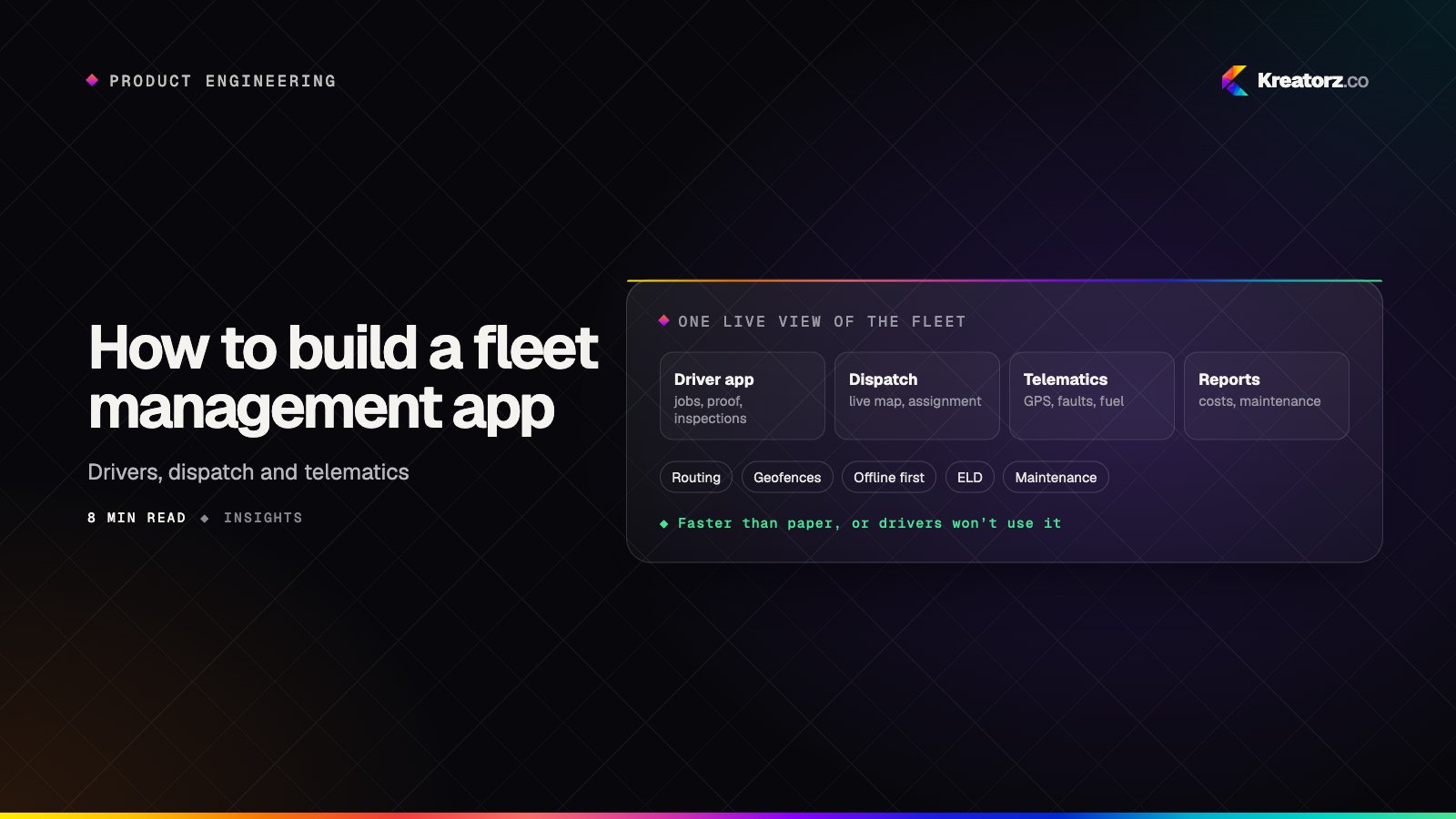
How to build a fleet management app that drivers and dispatchers rely on
A fleet management app turns scattered calls, paper forms and spreadsheets into one live view of vehicles, drivers and jobs. Here is a step-by-step guide to defining your fleet's needs, the features for drivers, dispatchers and managers, GPS and telematics data, routing, compliance, offline use, the tech stack and launching a pilot.
25 November 2026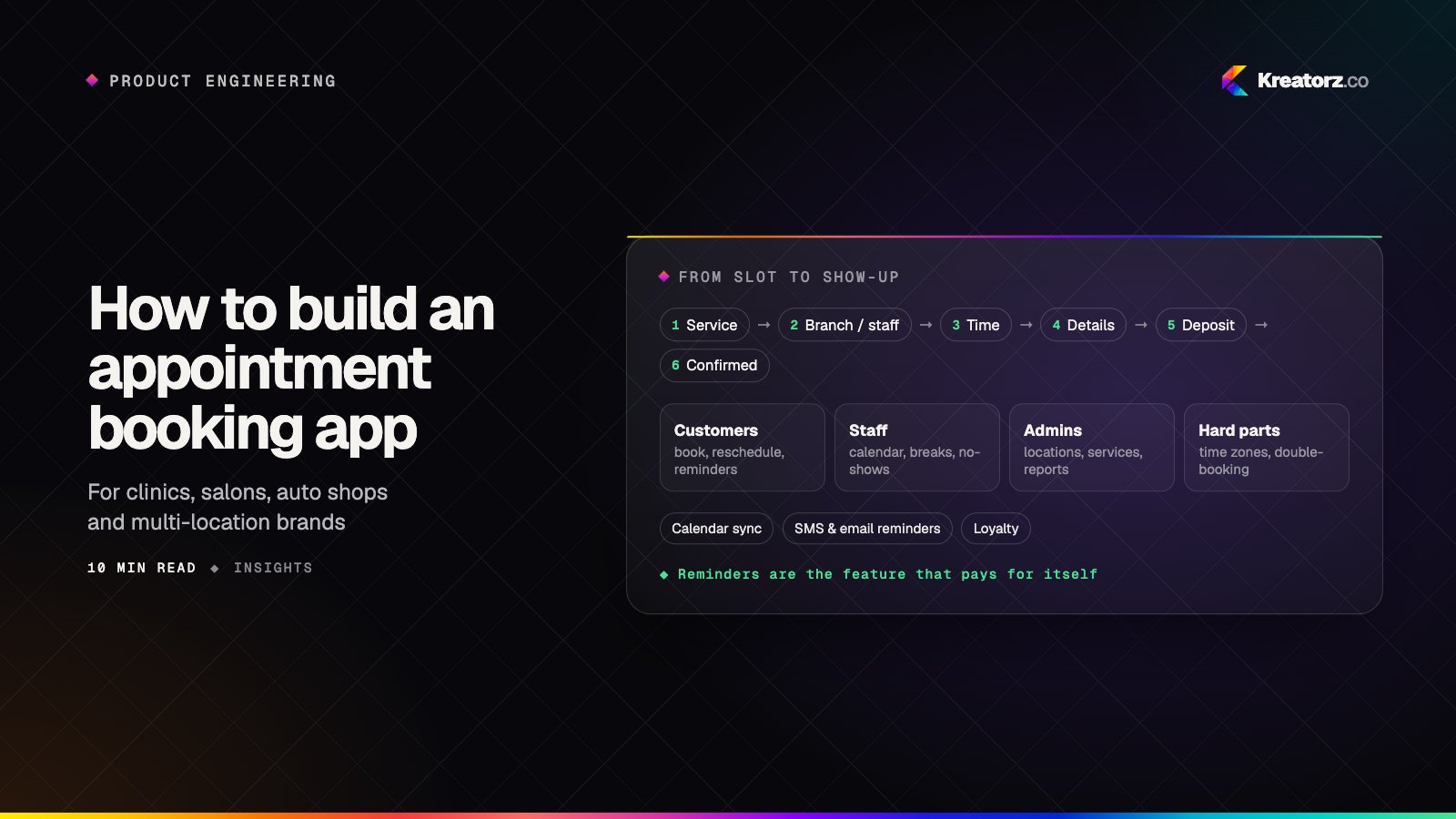
How to build an appointment booking app for your business
An appointment booking app looks simple until two customers grab the same slot, a reminder goes out in the wrong time zone or a no-show empties a chair. Here is a step-by-step guide for clinics, salons, studios and multi-location service businesses deciding whether to buy or build, and how to build it well.
21 November 2026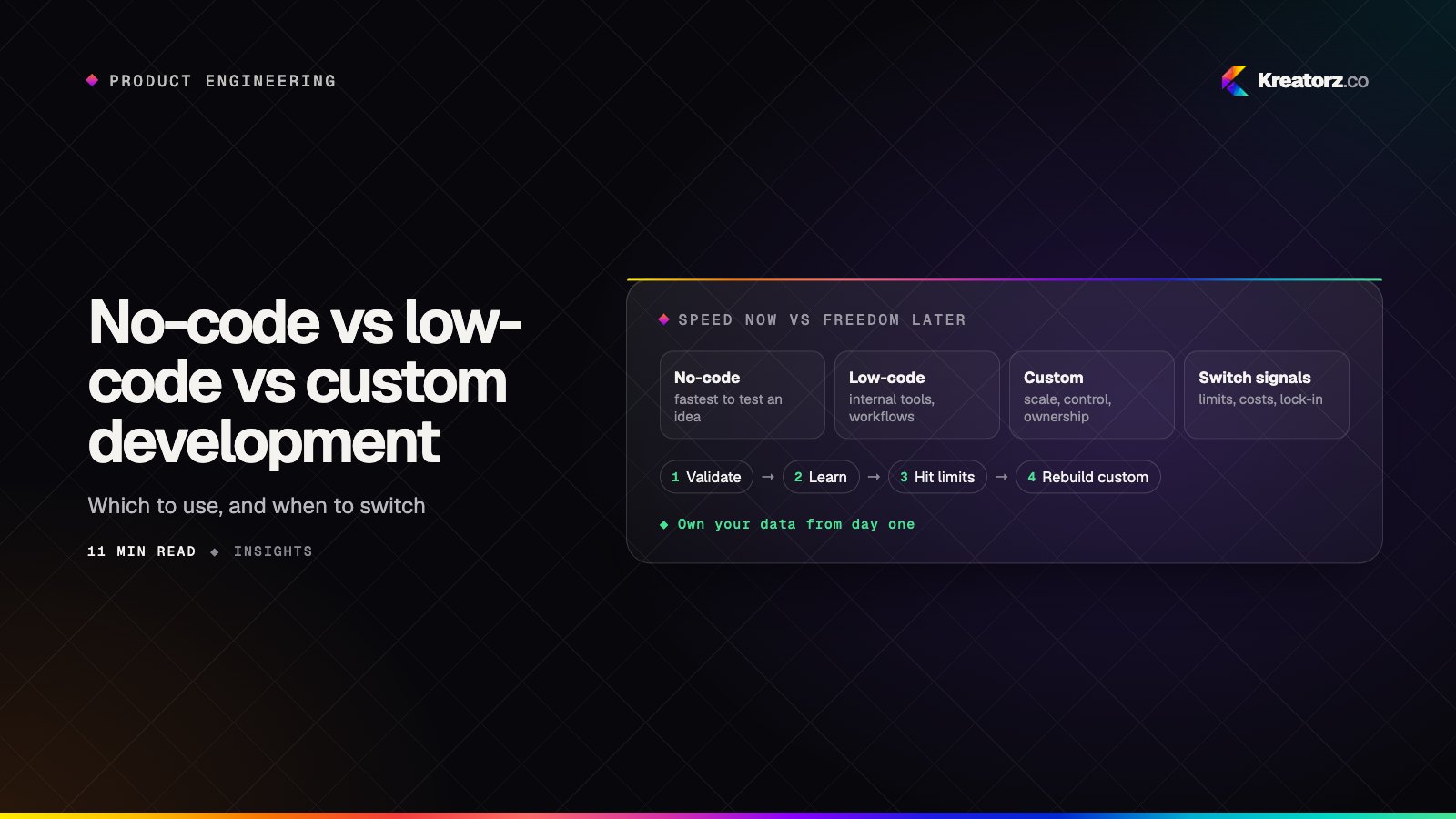
No-code vs low-code vs custom development: which should you use to build your app?
No-code builders, low-code platforms and custom code can all produce a working app, but they trade speed for control in very different ways. Here is how the three compare on cost, flexibility, scale, integrations, security and ownership, where each one genuinely wins, the hidden limits to watch for, and when to move from no-code to custom.
21 November 2026