A huge share of the web still runs on PHP — booking systems, online shops, member portals and the internal tools that keep businesses moving. Much of it was written years ago, by people who have since moved on. Kreatorz is a Laravel development company that does two things well: building new Laravel applications with modern practices, and taking responsibility for existing PHP systems that have become fragile, slow or risky to change.
Laravel gives a small team a remarkable amount out of the box — routing, an expressive ORM, queues, scheduling, authentication, mail and testing — which makes it one of the most productive ways to deliver a business application. Our job is to use that productivity without letting the codebase drift into something nobody wants to touch.
When Laravel is a strong choice
Laravel is a good fit when your product is:
- Workflow-heavy — records, statuses, approvals, notifications and reports.
- Admin-led — staff need powerful back-office screens as much as customers need a polished front end.
- Commerce-oriented — catalogues, carts, orders, invoices and payment integrations.
- Already in PHP — your team, hosting or existing code makes PHP the lowest-risk path.
- Needed quickly — the framework's conventions let us move from idea to working software fast.
For real-time-first products or heavy AI and data workloads, Node.js or Python may be better primary choices — and a Laravel application can happily call services written in either.
Laravel development services
Custom PHP web applications
Customer portals, booking systems, membership platforms and operations tools built on Laravel, with a clean domain structure, form requests for validation, policies for authorisation and feature tests for every key journey.
Laravel API development
Versioned REST APIs with Laravel Sanctum or Passport for authentication, API resources for consistent responses, and rate limiting and documentation built in. These APIs power mobile apps, single-page front ends and partner integrations.
E-commerce and catalogue platforms
Product catalogues, variants, pricing rules, carts, checkout, payment gateways, order management and fulfilment hooks. When an off-the-shelf platform cannot model your business, a custom Laravel build gives you full control over the rules.
Admin portals and back offices
Role-based dashboards, bulk actions, imports and exports, audit trails and reporting. Tools such as Laravel Nova or Filament are options when a fast, polished admin matters more than a fully bespoke interface.
Legacy PHP modernisation
Upgrading unsupported PHP versions, moving hand-rolled or abandoned frameworks to Laravel, and paying down technical debt while the business keeps trading. More on this below.
SaaS on Laravel
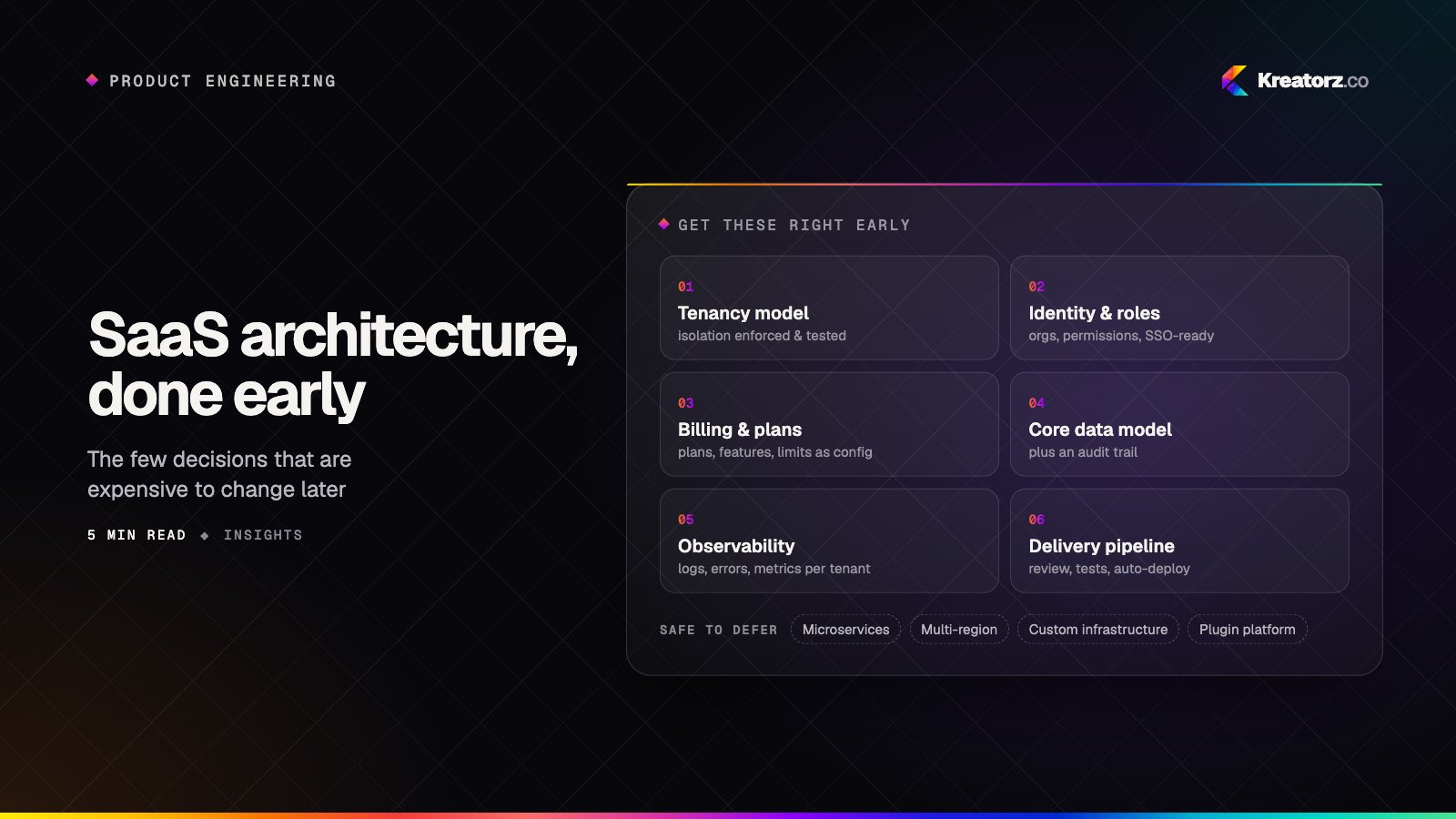
Multi-tenant data separation, subscription billing, team management and usage limits. Our SaaS development page covers the wider product and architecture questions.
Building the front end — three Laravel approaches
| Blade with Livewire | Inertia.js with Vue or React | Laravel API with a separate SPA or mobile app | |
|---|---|---|---|
| How it works | Server-rendered components with reactive updates | Server-side routing, client-side rendering | Laravel serves JSON, front end is a separate project |
| Team skills | Mostly PHP | PHP plus Vue or React | PHP plus a dedicated front-end team |
| Strengths | Simple stack, fast to build | App-like UX without building an API | Clean separation, one API for web and mobile |
| Best for | Admin tools, portals, internal systems | Rich dashboards and customer apps | Products with mobile apps or several clients |
| Trade-off | Less suited to highly interactive interfaces | Tied to Laravel routing | More moving parts to build and deploy |
We choose per product. A back office might use Livewire while the customer-facing app is a React front end talking to a Laravel API.
Upgrading legacy PHP without stopping the business
Old PHP systems often carry years of hard-won business rules. Throwing them away is risky; leaving them alone is riskier. Our modernisation path:
- Assess. Code, database, server configuration, dependencies, security exposure and the journeys that generate revenue.
- Stabilise. Fix critical vulnerabilities, set up backups, version control and monitoring if they are missing.
- Cover with tests. Characterisation tests capture what the system does today so changes can be made safely.
- Upgrade in steps. Move through supported PHP versions and framework versions incrementally, rather than one big leap.
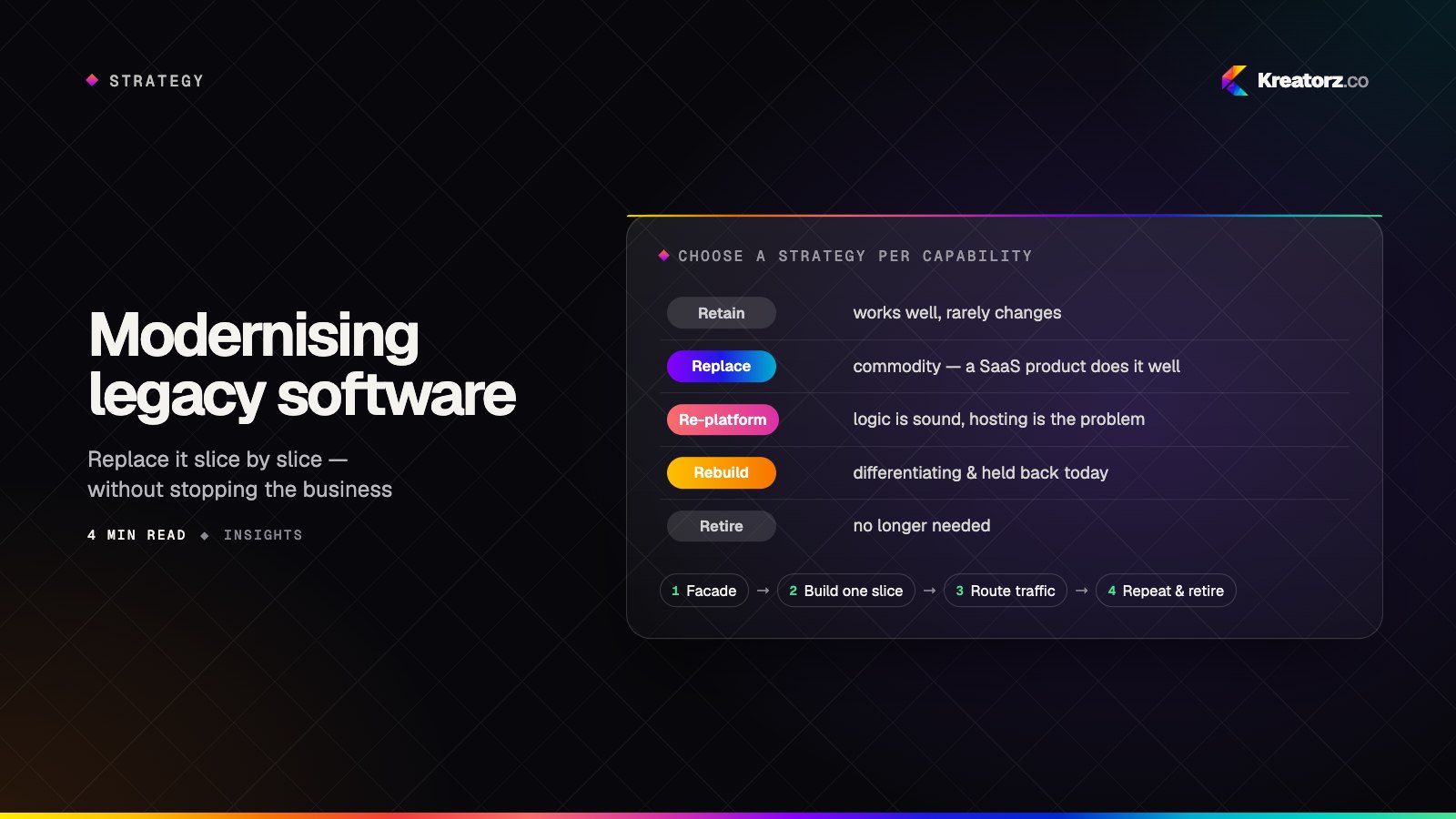
- Strangle and replace. Route new and rewritten areas through Laravel alongside the old code, retiring legacy modules one by one.
- Modernise the platform. Containerised environments, CI/CD, queues for slow work and managed hosting.
- Hand over or continue. Documentation for your team, or ongoing maintenance and feature work from ours.
Our article on modernising legacy software explains when to refactor, when to rebuild and how to keep risk low.
Laravel ecosystem tools we can use
Laravel's first-party tools are options, chosen only when they solve a real problem:
- Horizon for monitoring and balancing Redis queues.
- Livewire and Inertia for interactive front ends without a separate API.
- Nova for a ready-made admin panel.
- Forge for provisioning and managing servers, or Vapor for serverless deployment on AWS.
- Scout, Cashier and Socialite for search, subscription billing and social sign-in.
Alternatively we deploy with Docker and infrastructure as code on AWS, which suits teams that want full control over their environment.
What we build with Laravel
- Property and rental platforms with search, viewing requests, online rental applications, a broker management portal and digital contracts, like Rentech in Saudi Arabia, which integrates with Ejar.
- Service and scheduling platforms with customer records, appointments and status updates — the kind of operations system we delivered for Integrity 1st Automotive.
- Catalogue plus booking platforms that combine products, appointments and reminders, similar to our work for Rose Optometry.
- Online stores with custom pricing, B2B accounts and ERP integrations.
- Websites and client portals for professional services firms, such as personal injury law firm Foster Wallace, with legal resources, free consultation and case evaluation requests.
- Back-office systems that replace spreadsheets with permissions, workflows and audit trails.
- APIs behind iOS, Android and cross-platform apps.
Why Kreatorz for Laravel development
- Modern PHP practice. Strict types, static analysis, automated tests with Pest or PHPUnit, and code review on every change.
- Calm with legacy code. We are comfortable inheriting systems with no documentation and making them safe again.
- Beyond PHP. One team covering front end, mobile, cloud and AI, so Laravel is used where it fits — see full stack development.
- AI-native. Recognised with the Global AI Impact Award, Global Image Awards Middle East, Riyadh 2026.
- Ownership and visibility. Your code, servers and accounts are yours from day one, with weekly demos and a shared backlog.
- Worldwide. Teams in the United States, Canada and Pakistan.
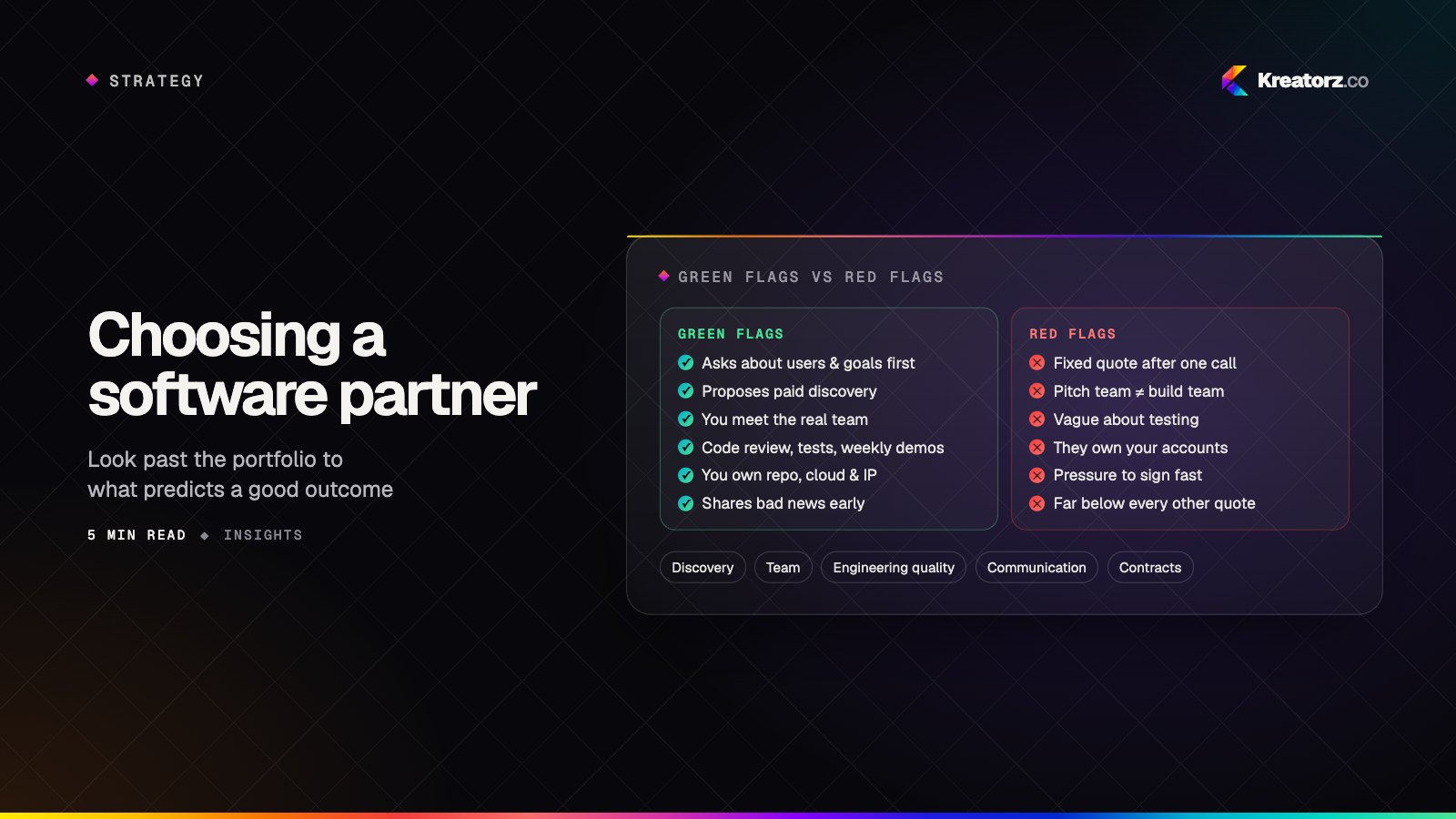
Not sure whether to upgrade or rebuild? Our guide to choosing a software development partner helps you assess options, or contact us for a review.