Calling a language model's API takes an afternoon. Turning it into a feature that is accurate, fast, affordable, secure and still working after the next model release takes engineering. Kreatorz is an LLM development company that does that engineering: choosing the right models, grounding them in your data, connecting them to your systems, measuring quality and keeping costs under control.
We work with the leading commercial models — OpenAI, Anthropic Claude and Google Gemini — as well as open-source models such as Llama and Mistral, and we design every system so you can switch models as the market changes.
LLM and generative AI services
- LLM integration — add language-model features to your existing web app, mobile app or internal tools: summaries, drafting, classification, extraction, search and assistants.
- Custom LLM applications — new products built around generative AI, from copilots and writing tools to analysis and decision-support apps. See AI app development.
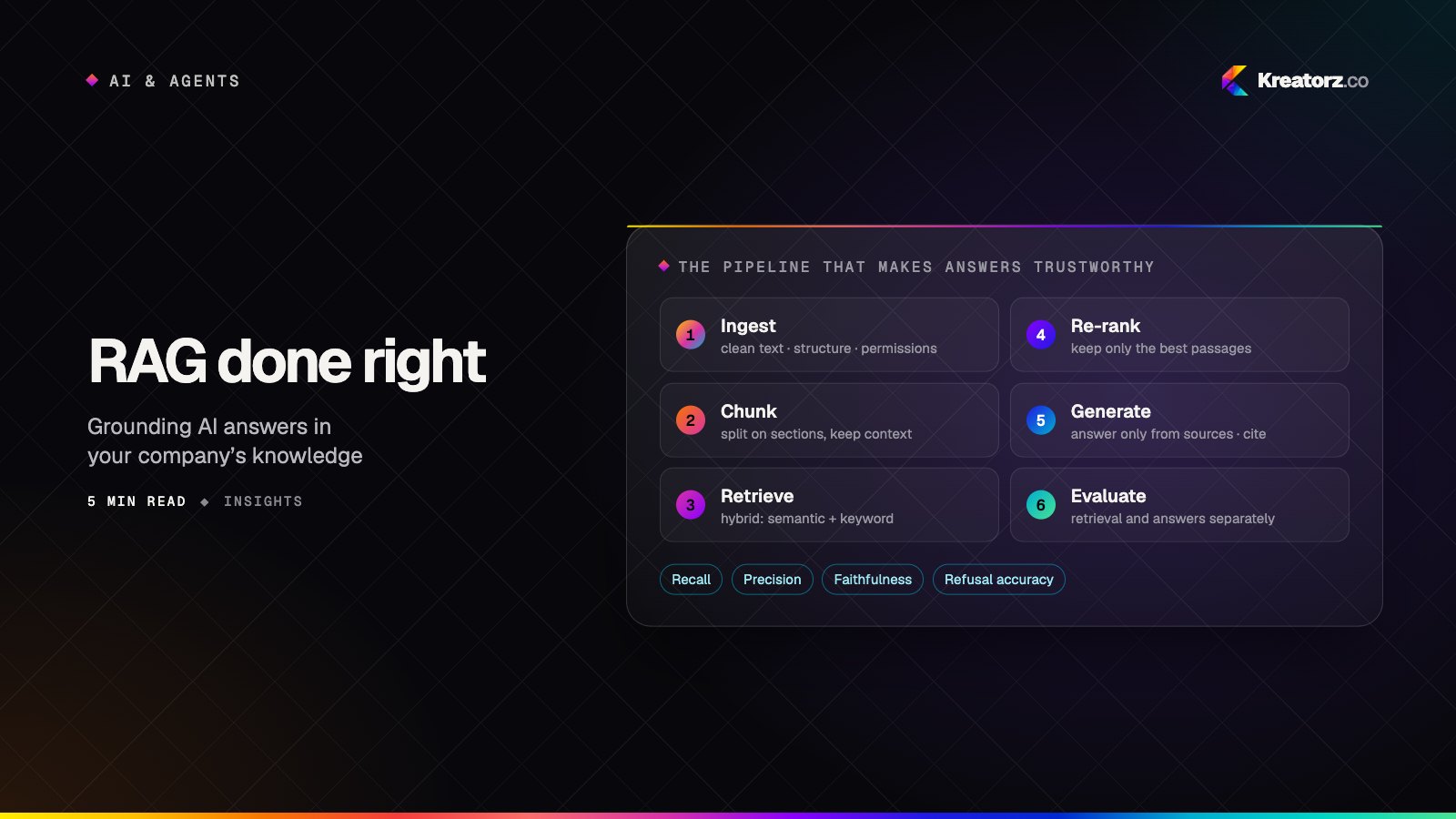
- RAG and knowledge systems — answers grounded in your own content, with citations and access control. See RAG development.
- Fine-tuning — adapting a model to your format, tone or a narrow task when prompting and retrieval are not enough, with an evaluation set to prove it helps.
- Private LLM deployment — open-source models running in your own cloud account or region, for data that must stay under your control.
- AI integration services for enterprises — connecting LLMs to CRMs, ERPs, document systems and data warehouses, with single sign-on, permissions and audit logs.
- Agents and tool use — LLMs that take actions through your APIs. See AI agent development and MCP server development.
Choosing the right model
| Option | Best for | Trade-offs |
|---|---|---|
| Commercial APIs (OpenAI, Claude, Gemini) | Highest quality, fastest start, broad language support | Usage-based cost, data processed by the provider under their terms |
| Cloud-hosted models (AWS Bedrock, Azure OpenAI, Vertex AI) | Enterprise controls, region choice, your existing cloud contract | Model availability varies by region |
| Open-source models (Llama, Mistral) | Data that cannot leave your infrastructure, predictable cost at scale | You run and update the infrastructure |
| Fine-tuned models | Consistent format or tone, narrow specialist tasks | Needs good training examples and ongoing evaluation |
Most products combine several: a strong model for hard reasoning, a smaller, cheaper one for simple steps, and retrieval for facts. We decide based on measured results on your own tasks, not on benchmarks.
Quality, cost and safety
- Evaluation — a test set built from real examples, scored on every prompt or model change, so quality goes up instead of drifting.
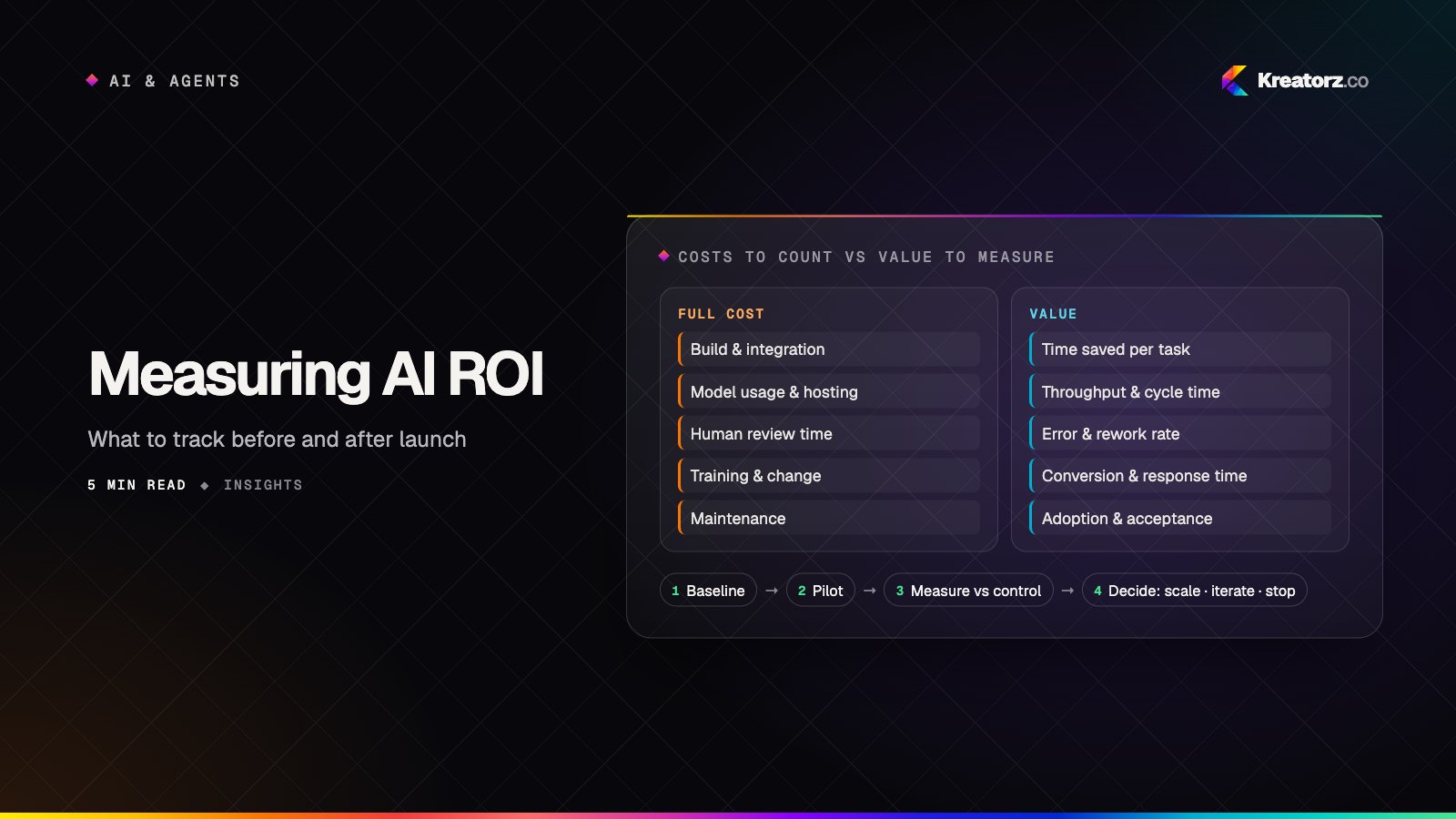
- Cost control — caching, model routing, shorter prompts and usage limits, with cost per request on a dashboard.
- Speed — streaming responses, parallel calls and smaller models where they are good enough.
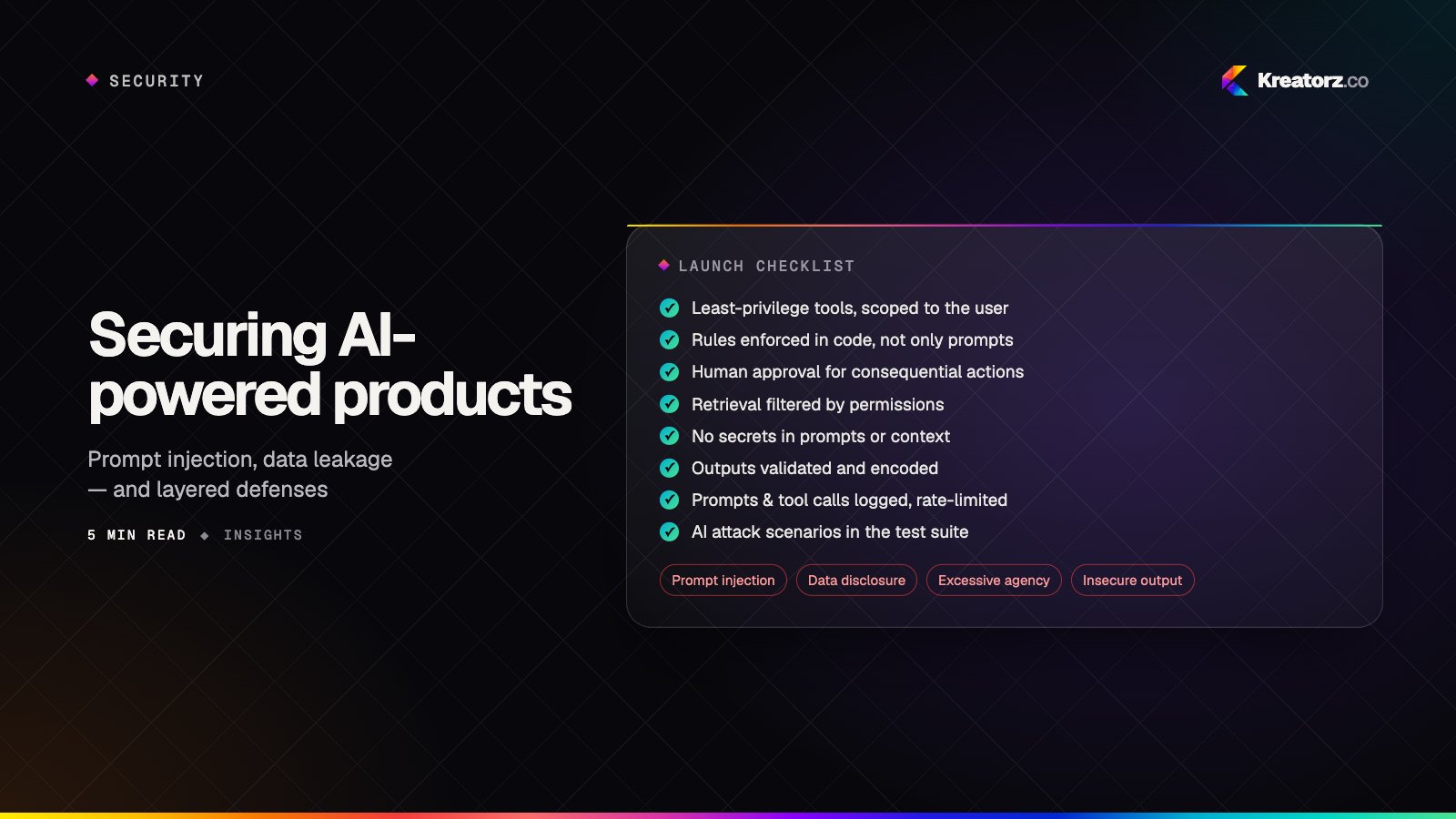
- Security — defenses against prompt injection and data leakage, keeping secrets and unneeded personal data out of prompts, and providers that do not train on your data. See securing AI products.
How we work
- Discovery — the tasks to automate or improve, the data involved, and how success will be measured.
- Proof of value — a working prototype on real examples, with accuracy and cost per task measured.
- Production build — integration, interface, guardrails, monitoring and admin controls.
- Launch and improve — staged rollout, feedback loops and regular evaluation as models change.
Start your generative AI project
Tell us the problem you want AI to solve. We will tell you honestly whether an LLM is the right tool, and come back with a clear next step. Get a free consultation.